In the ever-evolving landscape of gaming, Hogwarts Legacy emerged as a monumental success upon its 2023 release, captivating over 30 million players worldwide with its breathtaking open-world rendition of the wizarding universe. Set against the backdrop of 1890s Scotland, the game allowed fans to step into the shoes of a student at Hogwarts, exploring iconic locations like the castle and Hogsmeade with unparalleled immersion. Its spell-casting mechanics and narrative depth offered endless adventures, making it a beloved entry in the Harry Potter franchise. Yet, as players delved deeper, a persistent flaw surfaced—the lack of enemy variety, which often left combat feeling as repetitive as a worn-out vinyl record spinning the same tune. This shortfall, while not diminishing the game's overall magic, highlighted a critical area for improvement in the highly anticipated sequel, Hogwarts Legacy 2, which, as of 2025, is poised to redefine the experience. The developers at Avalanche Software must seize this opportunity to expand the roster of foes, drawing from the rich tapestry of magical creatures to transform battles into unpredictable, heart-pounding encounters that resonate with fans old and new.
As a dedicated player who has spent countless hours traversing the Scottish Highlands in the original game, I often found myself yearning for more diversity in adversaries. Facing the same dark wizards, goblins, spiders, and Inferi became a tedious routine, like eating the same bland porridge every morning—it sustained me but lacked the spice of surprise. This monotony stifled the otherwise brilliant combat system, which, with its intricate spell combos and enemy weaknesses, deserved to shine brighter. For Hogwarts Legacy 2 to truly soar, it must introduce a menagerie of new creatures, such as the mischievous Niffler or the formidable Graphorn from the Fantastic Beasts series. These additions could turn skirmishes into dynamic puzzles, where each foe feels like a unique brushstroke on a vast, living canvas of magic.
The Current State of Enemy Variety in Hogwarts Legacy
Hogwarts Legacy's combat system is undeniably one of its strengths, offering a deep and rewarding experience as players master spells and strategies. However, the limited enemy types—primarily dark wizards, goblins, spiders, and Inferi—act as a bottleneck, restricting the system's full potential. This lack of diversity makes encounters predictable, reducing the thrill of exploration. For instance, venturing into forbidden forests or ancient ruins often led to déjà vu, with the same foes appearing like clockwork. As someone who relishes the unpredictability of RPGs, this repetition felt akin to navigating a maze with only one path—it was functional but failed to ignite the imagination.
To illustrate the issue, consider the following comparison of enemy types in the original game versus what could be possible in the sequel:
| Enemy Type | Role in Combat | Potential for Improvement in Sequel |
|---|---|---|
| Dark Wizards | Spell-casting foes requiring counters | Add varied magical abilities, e.g., elemental attacks |
| Goblins | Melee-focused, aggressive fighters | Introduce sub-types like armored goblins with unique weaknesses |
| Spiders | Swarm enemies with poison effects | Include larger, boss-like arachnids with environmental interactions |
| Inferi | Undead minions vulnerable to fire | Expand to include cursed spirits or animated objects |
Adding more creatures would not only enhance combat but also deepen the lore immersion. For example, the Niffler, with its obsession for shiny objects, could create chaotic distractions during battles, forcing players to adapt on the fly. Similarly, the Graphorn's raw strength would demand strategic teamwork, akin to taming a tempestuous storm. These elements would elevate the game from a mere adventure to a symphony of magical chaos.
Drawing Inspiration from Fantastic Beasts
The Fantastic Beasts films serve as a treasure trove of ideas for Hogwarts Legacy 2, showcasing creatures that could inject much-needed variety. Beyond just enemies, these beings could fulfill roles as companions or environmental hazards, adding layers to gameplay. Here's a list of potential additions and their impact:
-
Niffler: A mischievous creature that steals items mid-fight, turning battles into frantic chases—perfect for unpredictable encounters.
-
Graphorn: An aggressive beast requiring careful timing to defeat, much like outwitting a raging river.
-
Bowtruckle: As a non-combat pet, it could bond with players, offering buffs or assistance in puzzles.
-
Demiguise: Gentle companions that aid in stealth missions, reflecting the game's exploration aspects.
Including these creatures would honor the wizarding world's depth while keeping the experience fresh. As a player, I recall moments in the original game where the absence of such diversity made the world feel static, like a beautifully painted mural that never changes. With Hogwarts Legacy 2, developers have the chance to weave these elements seamlessly, ensuring that every duel feels as exhilarating as discovering a hidden chamber.
Navigating Setting Restrictions for a Cohesive Experience
Despite the potential for expansion, Hogwarts Legacy 2 must adhere to the constraints of its 1890s European setting to maintain authenticity. The game's timeline, predating the Harry Potter series, excludes familiar characters and certain creatures like Buckbeak or American-based entities such as the Thunderbird. This limitation, however, is not a barrier but a framework for creativity. Developers can draw from lesser-known European lore to introduce fitting adversaries, such as:
-
Ancient forest guardians inspired by Celtic myths
-
Cursed artifacts that animate as foes
-
Regional variants of existing creatures, e.g., highland trolls
Staying true to canon ensures the world feels cohesive, much like a meticulously crafted tapestry where every thread matters. Rushing the sequel could unravel this magic, so a measured approach is essential. Looking ahead to 2025, I envision Hogwarts Legacy 2 as a phoenix rising from the ashes—transforming past shortcomings into a vibrant, ever-evolving adventure that sets new standards for magical RPGs.
In conclusion, Hogwarts Legacy 2 holds immense promise to build on its predecessor's foundation. By diversifying enemies and embracing the full spectrum of magical creatures, it can deliver an experience that feels both nostalgic and groundbreaking. As fans eagerly await its arrival, the hope is for a game where combat dances with unpredictability, and the wizarding world blossoms like a forgotten garden rediscovered.
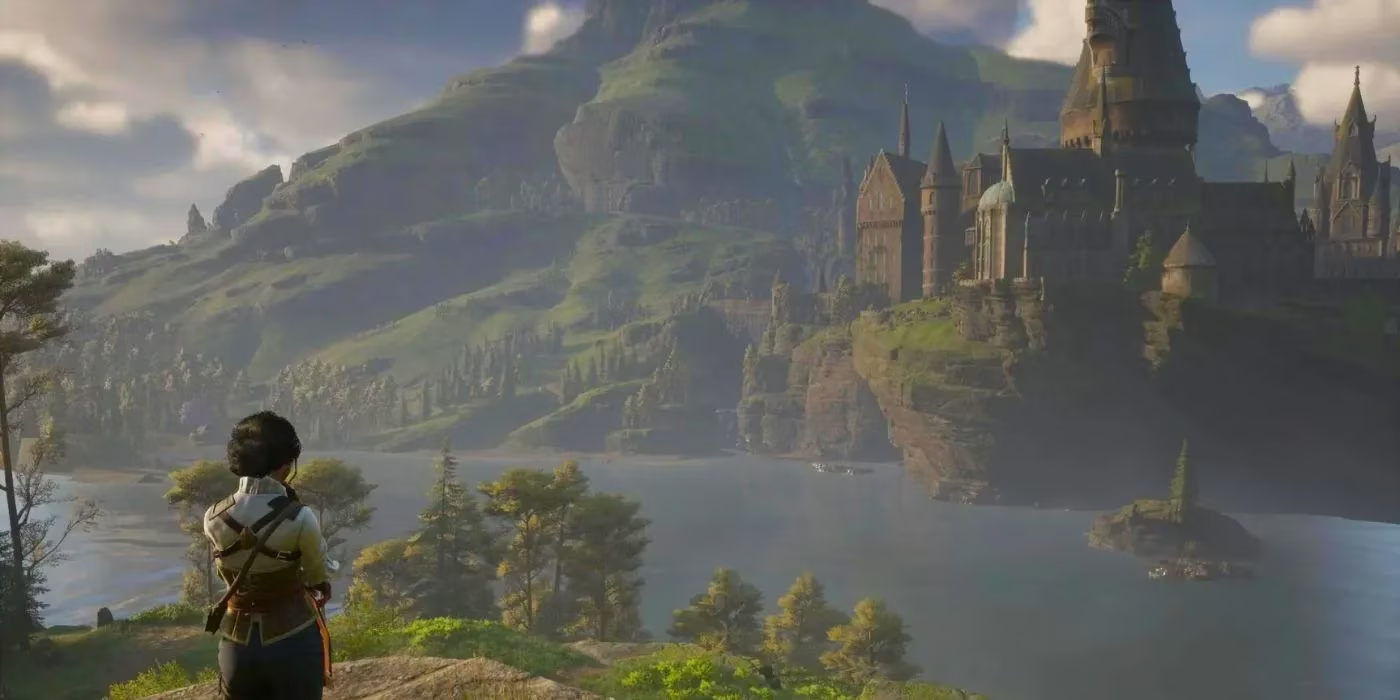
The iconic Hogwarts Castle, a visual masterpiece in the game, awaits new adventures in the sequel.
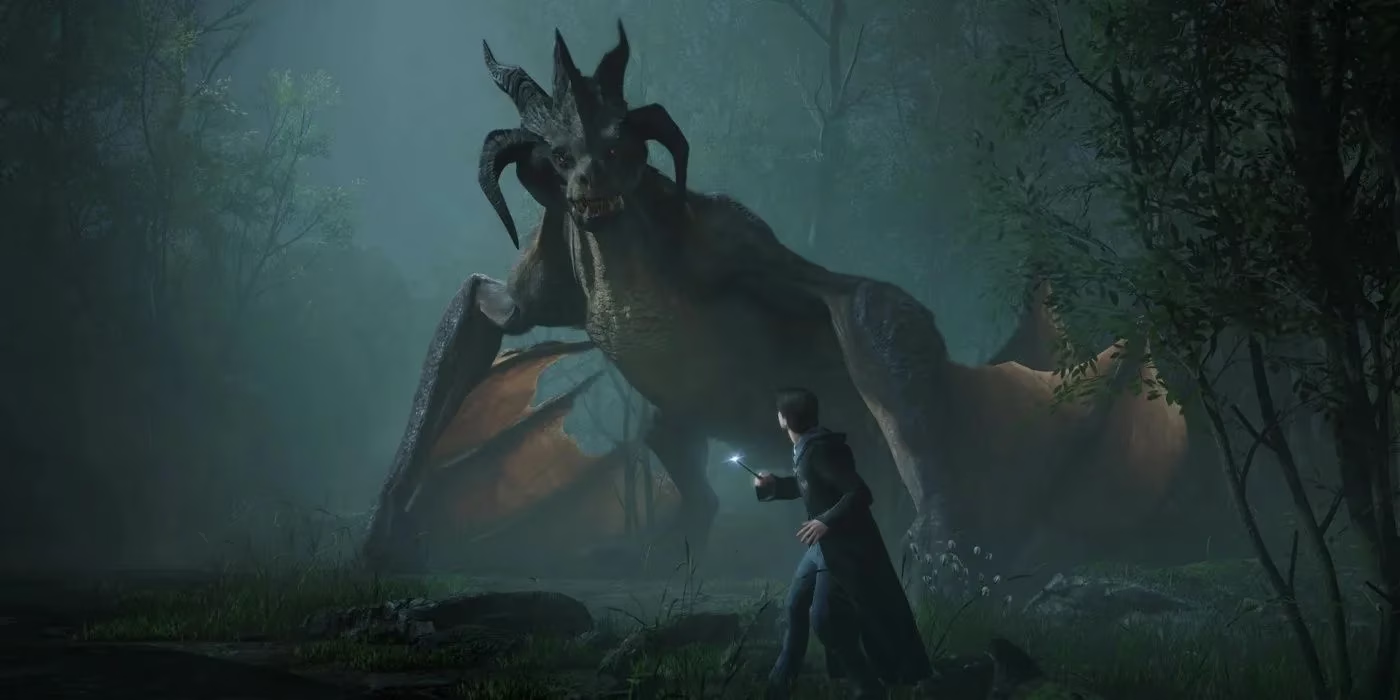
Dragons represent the potential for epic foes, yet their rarity in the original game highlighted the need for more variety.

Dynamic combat scenes like this could be enriched with diverse enemies in the upcoming sequel.
Comments