There’s a special kind of magic in soaring over the Forbidden Forest as the morning sun paints Hogwarts in shades of gold. Yet for all the breathtaking vistas and the wind-whistling speed, countless players have found themselves yanked out of that immersion by a jarringly mundane problem: they simply cannot land where they want. As 2026 unfolds and the wizarding community buzzes with excitement for the officially teased sequel, one flawed mechanic from the original game still haunts the discussion—broomstick landing restrictions. If Avalanche Software wants Hogwarts Legacy 2 to truly sweep fans off their feet, the absolute freedom to touch down anywhere is non-negotiable.
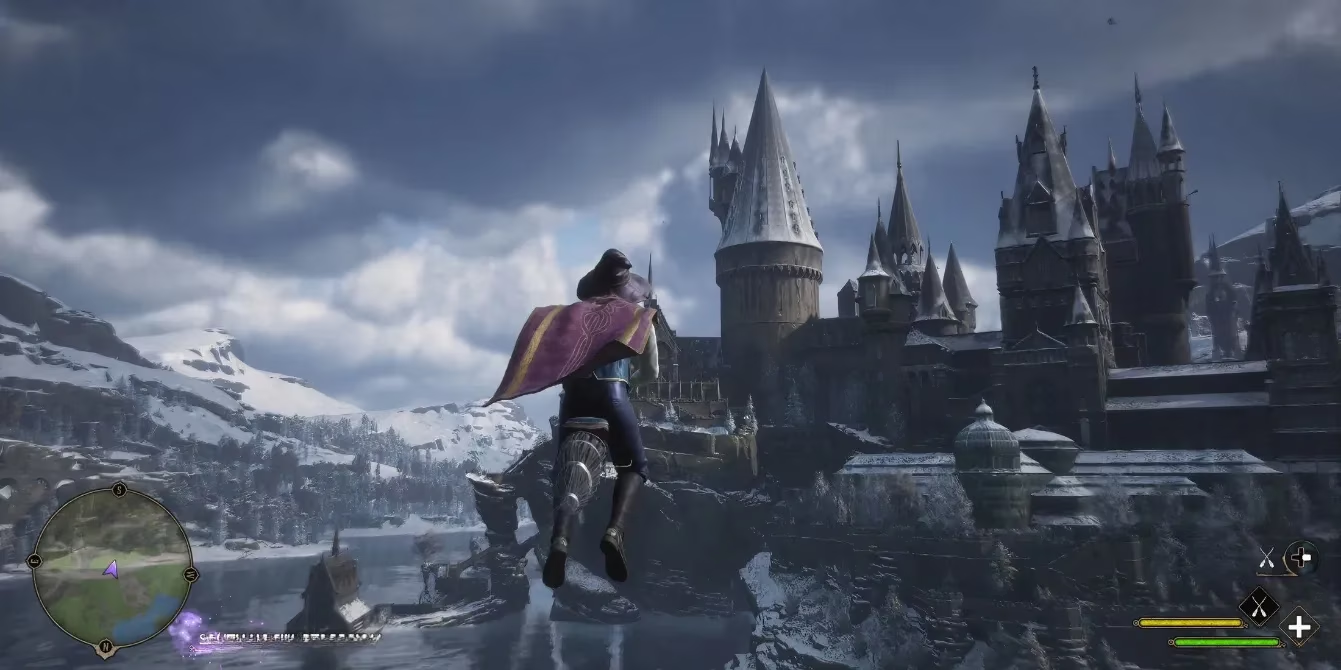
The first Hogwarts Legacy nailed the sensation of flight. Whether players preferred the humble school broom, a sleek night dancer, or even riding on grand winged beasts like the Thestral or Hippogriff, the sky became a second home. But that home came with invisible walls. The moment a player wanted to drop onto the roof of The Three Broomsticks, land mid-courtyard to join a conversation, or gracefully perch atop the Astronomy Tower to admire the stars, the game politely—yet firmly—said no. The result? A chorus of frustrated sighs, repeated button mashing, and, in the worst cases, outright rage-quits.
Let’s unravel why this matters so much. Exploration defines the Hogwarts Legacy experience. Walking through the castle’s shifting staircases or using the Floo Network to zap across the Highlands is great, but flying represented a promise of unrestricted magical freedom. The reality, however, was a patchwork of no-flight zones. Key areas like Hogsmeade were completely cordoned off from aerial entry. You couldn’t lift off from open-roofed classrooms, nor could you descend gracefully into many quest hubs. The game demanded that players approach on foot or via Floo powder, which not only broke immersion but added tedious minutes of walking. Even worse, when players found themselves hovering outside these restricted zones, they often had to fly frustratingly close to the ground, spamming the landing button in the desperate hope of finding an obscure valid spot. Some witches and wizards actually reloaded a previous save rather than waste ten minutes circling a village that looked perfectly landable from above.
The core problem isn’t a tiny oversight; it’s a design philosophy that prioritized controlled navigation over player agency. There was no visible boundary marker, no enchanted barrier shimmering in the air—just a sudden refusal from the broom to descend. Players quickly learned that unless the terrain was flat and specifically designated “safe” by the game, their dreams of rooftop chill sessions were dashed. And because Thestral and Hippogriff mounts followed the exact same mechanics, there was zero respite. The magical creature that could supposedly take you anywhere was just as boxed in as the cheapest yew wood broom.
So what should Hogwarts Legacy 2 do differently? For starters, simply let players take off and land on any surface that looks remotely level. If a ledge exists, if a rooftop stands solid, if a cluttered alley in Hogsmeade has just enough space to squeeze a student—let that be a landing spot. Sure, clipping issues might arise, but with advanced physics engines in 2026, the sequel has no excuse not to at least attempt a dynamic solution. Freedom trumps occasional visual jank every time.
Going further, the sequel can turn broomstick landing from a pain point into a full-fledged feature. Imagine broomsticks with distinct handling characteristics. A lightweight Swiftstick could let you hover and land on the tiniest protrusion of the Astronomy Tower, while a heavy-duty Ember Dash might require a broader surface but offer breakneck speed in return. Upgrades purchased at Spintwitches Sporting Needs could modify not just acceleration and altitude, but also landing precision and wind resistance. Suddenly, the broom you choose isn’t just about looks or a speed stat—it’s a personal flight style.
🪄 Dream Broomstick Landing Mechanics (Wishlist for the Sequel)
| Feature | How It Elevates Gameplay |
|---|---|
| Land anywhere | Endless exploration, rooftop secrets, immersive role-playing |
| Broom-specific handling | Unlocks unique paths; a nimble broom navigates narrow ledges |
| Stamina & comfort | Adds realism; long flights require restorative charms |
| In-flight dismount | Seamless transition from air to spellcasting or creature mounting |
| Quidditch-ready controls | Sharp turns, dives, and pitch landing for the long-awaited sport |
Beyond landing, realism can extend to broom maintenance. Even with cushioning charms, hours of flight would leave any student sore. A gentle fatigue mechanic could encourage pit stops at Hogsmeade’s tea shops or scenic overlooks where the character stretches and admires the view. And what about broom polish? Using a kit every so often to keep the bristles in peak condition would scratch that simulation itch that Hogwarts Legacy hinted at with its Room of Requirement potion stations and herbology tables. It’s not about making things tedious—it’s about making the world feel lived-in.
Of course, the looming dream of Quidditch plays perfectly into this. If players can dive, roll, and perch accurately, then chasing a Golden Snitch through the hoops becomes a thrilling possibility. The original game’s handwave—that Quidditch was “cancelled” for the year—felt like a missing spell in the game’s grimoire. A fully realized broom flight system paves the runway for the sport’s triumphant return.
The silver lining? The community’s collective voice has grown louder. In 2026, forums and social channels are overflowing with wishlists, and Avalanche Software seems to be listening. The fact that we’re even discussing Hogwarts Legacy 2 with so much passion proves the first game’s foundation was solid. Broom flight was 90% of the way there. It gave players the skies; now it needs to give them the landing pads too. Allowing students to plant their feet—and their brooms—truly anywhere will transform the sequel from a beloved adventure into the definitive Wizarding World simulation that fans have been conjuring in their hearts since childhood. Let the castle spires become resting perches, the Hogwarts grounds a vast landing strip, and Hogsmeade’s Cheery Owl Post a doorstep you can actually drop in on. After all, what’s the point of having a wand and wings if a simple roof can stop you?
Comments