In 2026, the Wizarding World stands at a pivotal crossroads. The announcement that the highly anticipated sequel, Hogwarts Legacy 2, will be linked in some way to the new HBO Harry Potter television series has sparked a complex debate among fans and critics alike. While the original Hogwarts Legacy (2023) was hailed as a landmark success precisely because it carved out its own space in the late 1800s—far removed from the saga of the Boy Who Lived—this new direction feels like a cautious retreat. Is the franchise, one of the most popular in the world, becoming afraid to truly grow beyond its foundational story? The Wizarding World is not ancient compared to titans like Star Wars or Marvel, yet its cultural footprint is massive. To secure its future, it must evolve beyond relying solely on Harry Potter as a narrative crutch. Linking a game sequel to a TV remake of the original books seems to contradict the very expansion the first game promised.
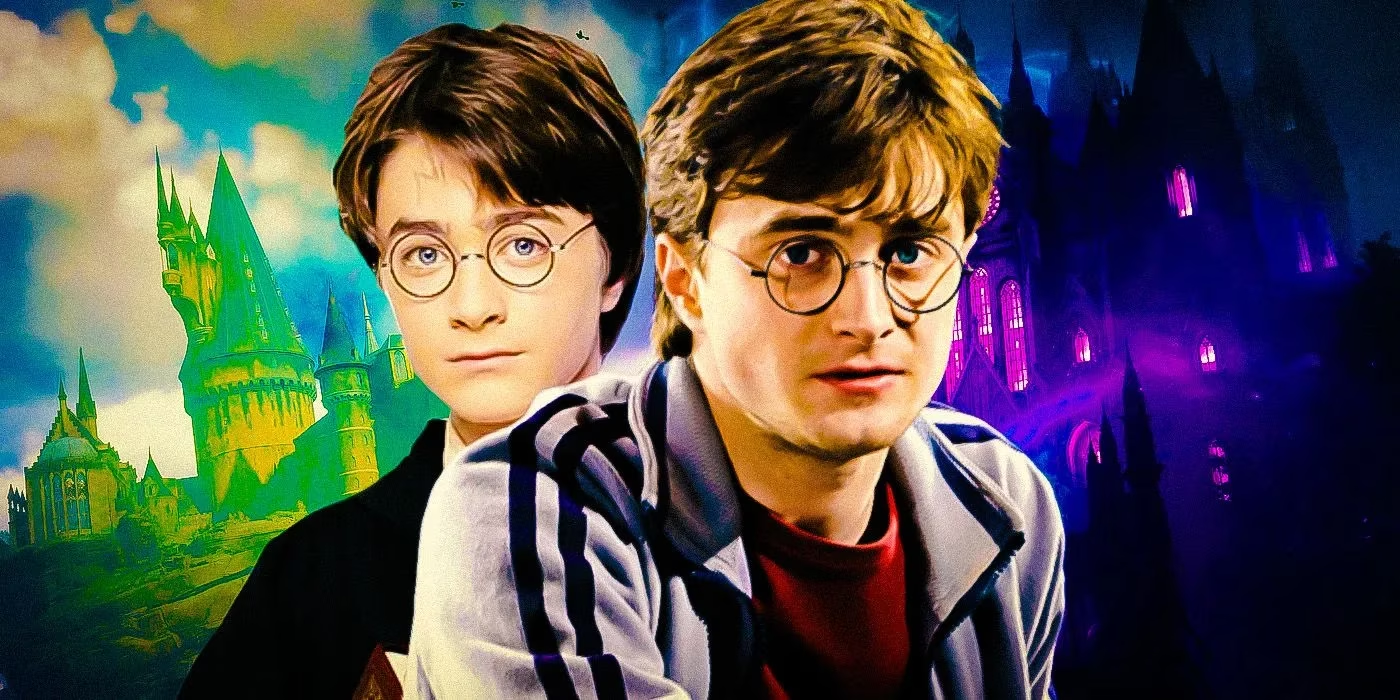
The Precarious Path of Wizarding World Spin-Offs
History has shown that spin-offs in this universe struggle when they stray too far from the core Harry Potter elements. Consider the track record:
-
✅ Harry Potter and the Cursed Child: A major theatrical success, but it literally has Harry Potter in the title and continues his story directly.
-
⚠️ Fantastic Beasts Series: Started with promise but faltered dramatically, leading to a production standstill after disappointing sequels.
-
✅ Hogwarts Legacy (2023): Until now, it stood alone as the only successful, major spin-off not directly linked to Harry Potter. Its success proved an appetite for new stories within the rich lore.
This context makes the decision to tether Hogwarts Legacy 2 to the HBO series perplexing. The HBO show itself already battles a narrative of being "unnecessary," given the enduring love for the original film series. Why would a game sequel, which has the potential to be a forward-looking pillar of the franchise, willingly align itself with that debate? It feels like a safe, corporate choice rather than a creative one, potentially stripping away the excitement of exploring uncharted magical territory.
A World Ripe for Expansion: Where Could Hogwarts Legacy 2 Go Instead?
The first game merely scratched the surface of possibilities. Hogwarts has a millennium of history, and the global wizarding world is vast. Instead of retreading ground connected to Harry's era, the sequel has a golden opportunity to be the Wizarding World's equivalent of Star Wars: Knights of the Old Republic—a project that defined a whole new era and created legendary characters like Darth Revan. What does the Wizarding World need? Its own Revan: a character so iconic they belong to the world first, not just to Harry's story.
Potential eras and settings for Hogwarts Legacy 2 could include:
| Era | Potential Focus | Why It's Compelling |
|---|---|---|
| Founding Era | The origins of Hogwarts with the four founders. | Explore the original conflicts and magic that built the school. |
| Global Wizarding Schools | Ilvermorny, Uagadou, or Mahoutokoro. | Truly expand the world beyond Britain and introduce diverse magical cultures. |
| The First Wizarding War | The rise of Gellert Grindelwald. | A darker, politically charged era with high stakes. |
| Distant Future | A post-Harry Potter magical world. | How has technology and society changed for witches and wizards? |
The Franchise's Growth Imperative
For the Wizarding World to endure for decades to come, it must successfully build out its universe. Relying endlessly on nostalgia for Harry, Ron, and Hermione is not a sustainable long-term strategy. The first Hogwarts Legacy demonstrated that fans are eager for new stories, new characters, and new corners of the map. By potentially linking the sequel back to the central Harry Potter narrative through the HBO series, Warner Bros. risks signaling a lack of confidence in the very world they are trying to expand. It's a paradoxical move: use a successful vehicle for independence to reinforce dependence on the original story.
Furthermore, this decision comes at a time when the gaming landscape is more receptive than ever to deep, lore-rich original stories within established franchises. Players don't just want a rehash; they want discovery. The rich lore of the Wizarding World is its greatest untapped asset. From ancient magical civilizations to untold histories of magical creatures and unsung heroes, the canvas is blank. Hogwarts Legacy 2 should be the brush that paints a new masterpiece, not just a faint copy of an old one.
Conclusion: A Crossroads for Magic
As we look ahead, the choice for Hogwarts Legacy 2 is symbolic of a larger choice for the entire franchise. Will the Wizarding World remain a beautifully crafted but ultimately small garden, constantly curated around the same central tree? Or will it have the courage to become a sprawling, vibrant forest, with new legends growing in every shadow and clearing? The safe path is clear: cling to Harry Potter. The bold path—the path that could ensure the franchise's relevance for another generation—is to let its games, and its stories, truly live on their own legacy. The magic of this world is its potential for infinite wonder. It's time to stop being afraid of the dark and start illuminating it.
Comments