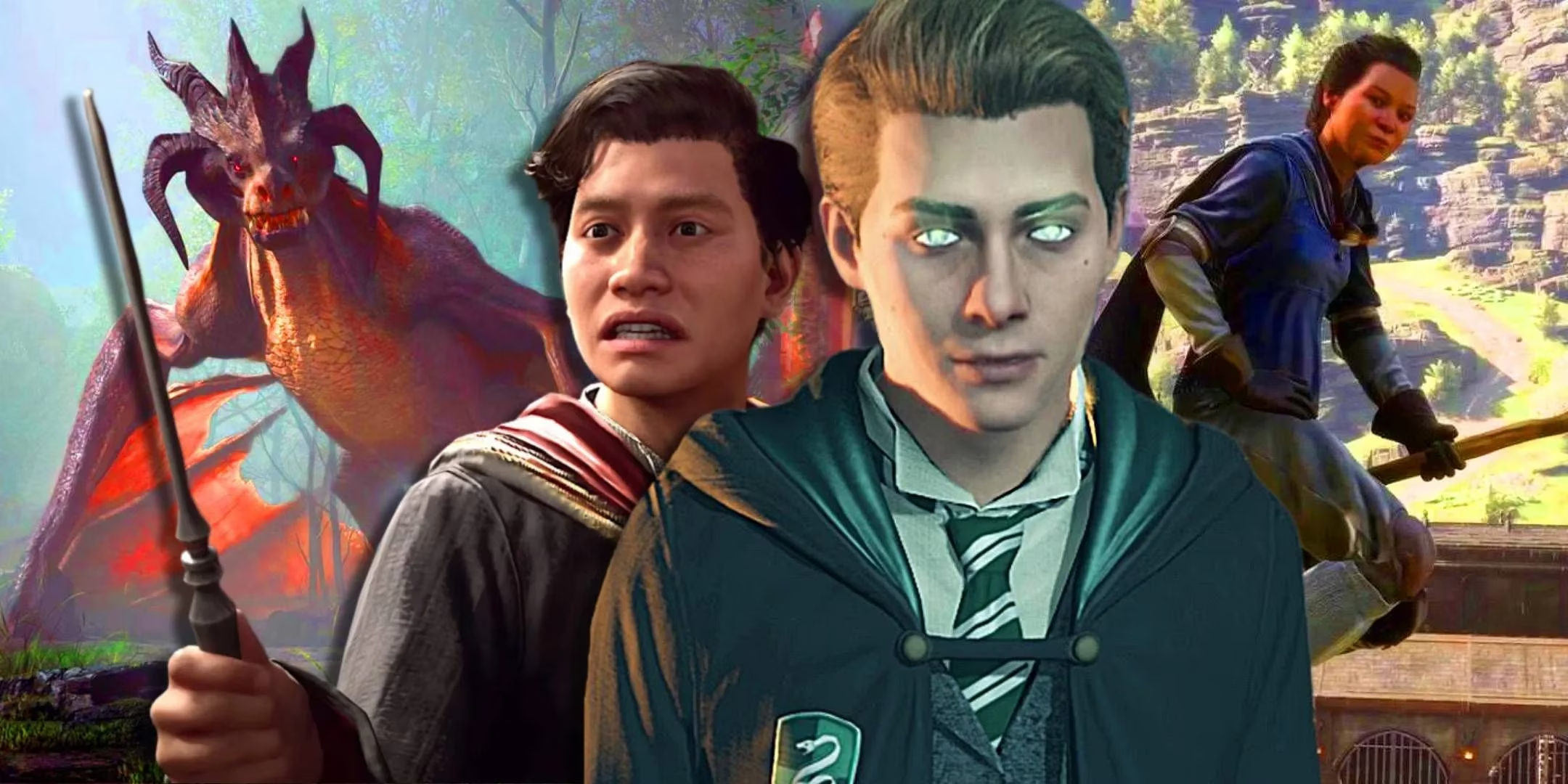
Let me tell you, as a professional gamer who's spent more hours exploring the corridors of Hogwarts than Snape spent brewing potions, the news about a sequel to Hogwarts Legacy has me both excited and a little worried. The first game was like finding a secret room in the library you never knew existed—it gave us the full, glorious Hogwarts tour, letting us peek into all four Common Rooms instead of just Gryffindor's. It sold like Chocolate Frogs at Honeydukes, so a sequel was as inevitable as a detention from Filch. But here's the rub: the recent buzz says Hogwarts Legacy 2 might be tying its fate to the upcoming HBO Harry Potter series reboot. To me, that feels like trying to use a Time-Turner to revisit yesterday's breakfast—pointless and likely to cause a headache.
Sure, revisiting the iconic castle in a sequel titled Hogwarts Legacy 2 is as reasonable as expecting a Quidditch match without a Snitch. But dragging us back to the 1990s, or even to modern times to sync with the new show, would be a colossal misstep. We've already walked those stone floors. We've dodged Peeves in those hallways. The world knows Harry's story inside out, backwards, and while under a Disillusionment Charm. Revisiting a familiar Hogwarts now would be like receiving the same Every Flavour Bean twice—initially exciting, but ultimately lacking surprise. The first game brilliantly explored the 1890s, a period as untouched by prior projects as a first-year's cauldron. The castle was familiar yet fresh, like a well-loved book with new marginalia. A sequel needs to offer something radically new, not a nostalgic retread that's been adapted into films, games, and now a new series.

Why The Founding Era Is The Perfect Potion
Forget the 20th or 21st century. Avalanche Software should point their wands much, much further back—to the 10th century and the Founding of Hogwarts. This era has been name-dropped more times than "You-Know-Who" in a scared Hufflepuff common room, but we've never actually visited it. Imagine walking the grounds when Godric Gryffindor, Rowena Ravenclaw, Helga Hufflepuff, and Salazar Slytherin weren't just names on a plaque or faces in a portrait, but living, breathing, and probably arguing wizards. Their legendary conflict over admitting Muggle-borns provides a plot foundation richer than a Gringotts vault and more compelling than another retelling of the Triwizard Tournament. Exploring this foundational prejudice would be dark, sure—darker than a Dementor's kiss—but the Wizarding World has never shied away from tough themes.
This setting would technically make Hogwarts Legacy 2 a prequel, and what an opportunity! Playing as one of the very first students would be like being present at the invention of the Floo Powder network—chaotic, unpredictable, and utterly magical. We could witness the school's creation in real-time:
-
Curriculum Chaos: Watching the Founders argue over whether Herbology is more important than Charms.
-
Architectural Anarchy: Seeing the moving staircases installed for the first time (hopefully with fewer glitches).
-
Creature Diplomacy: Helping Helga Hufflepuff negotiate with the merpeople in the Great Lake, which would have been wilder than a blast-ended skrewt ranch.
The developer would have near-total creative freedom, unshackled from decades of established lore. The castle itself would be a character in its infancy, as raw and unpredictable as a first-year's attempt at a Switching Spell.
A World Unformed: Magic's Wild Early Days
This is where the sequel could truly become special, transforming from a great game into a legendary one. A 10th-century setting isn't just about a different-looking castle; it's about a fundamentally different magical world. Think about it:
-
Ministry? What Ministry? The bureaucratic nightmare of the Ministry of Magic wouldn't exist. Magic would be less regulated, more primal.
-
Raw, Unrefined Spells: Magic could be more druidic or ritual-based. Casting a simple Lumos might require a handful of moonstone dust and a whispered incantation to a ancient oak, making every spell feel earned and powerful, like forging your own wand from a dragon's heartstring.
-
A Wilder World: The Forbidden Forest wouldn't be just "forbidden"; it would be an untamed, unknown frontier. The grounds around Hogwarts would be a constant source of danger and discovery, requiring the Founders to make fragile pacts with centaur tribes, acromantula ancestors, and whatever else lurked in the shadows.
This era would make the history of the Wizarding World richer and deeper. It would allow Avalanche to build something entirely new, rather than just remodeling the familiar. Trying to link the sequel to the HBO series feels like a marketing mandrake's scream—loud and distracting from a better path. The Wizarding World needs to grow beyond Harry Potter's shadow. The Fantastic Beasts series stumbled, but games have the unique canvas to experiment.
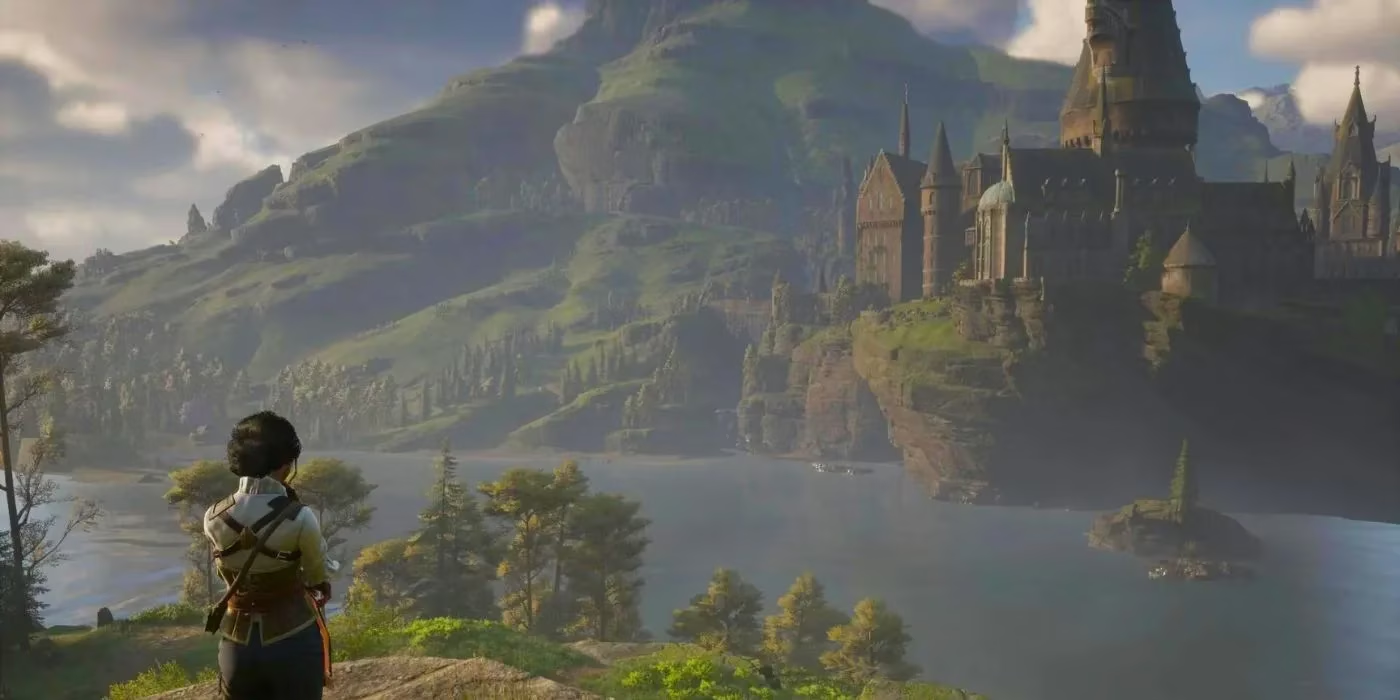
Handled with care, the Hogwarts Legacy series could be for Harry Potter what Knights of the Old Republic was for Star Wars: a beloved, foundational expansion of the lore that stands proudly on its own. It would be a game not about reliving a story we know, but about discovering the primordial soup from which all those beloved stories eventually grew. So, Avalanche, I implore you: don't tie your magic to a television reboot. Take a giant leap of faith into the past. Let us be there when the first Sorting Hat was stitched, when the first spell was scribbled into a textbook, and when the very idea of a school for witchcraft and wizardry was as fragile and brilliant as a soap bubble in the Scottish mist. That's a legacy worth building.
Comments