Few games have captured the sheer magic of exploring Hogwarts and its surrounding Highlands quite like Avalanche Software’s Hogwarts Legacy. When it first arrived, fans finally got to live out their wizarding dreams, attending classes, taming magical beasts, and unraveling a goblin rebellion. Yet as enchanting as the experience was, a storm brewed beneath its polished surface, centered on one divisive design choice: the handling of the three Unforgivable Curses.
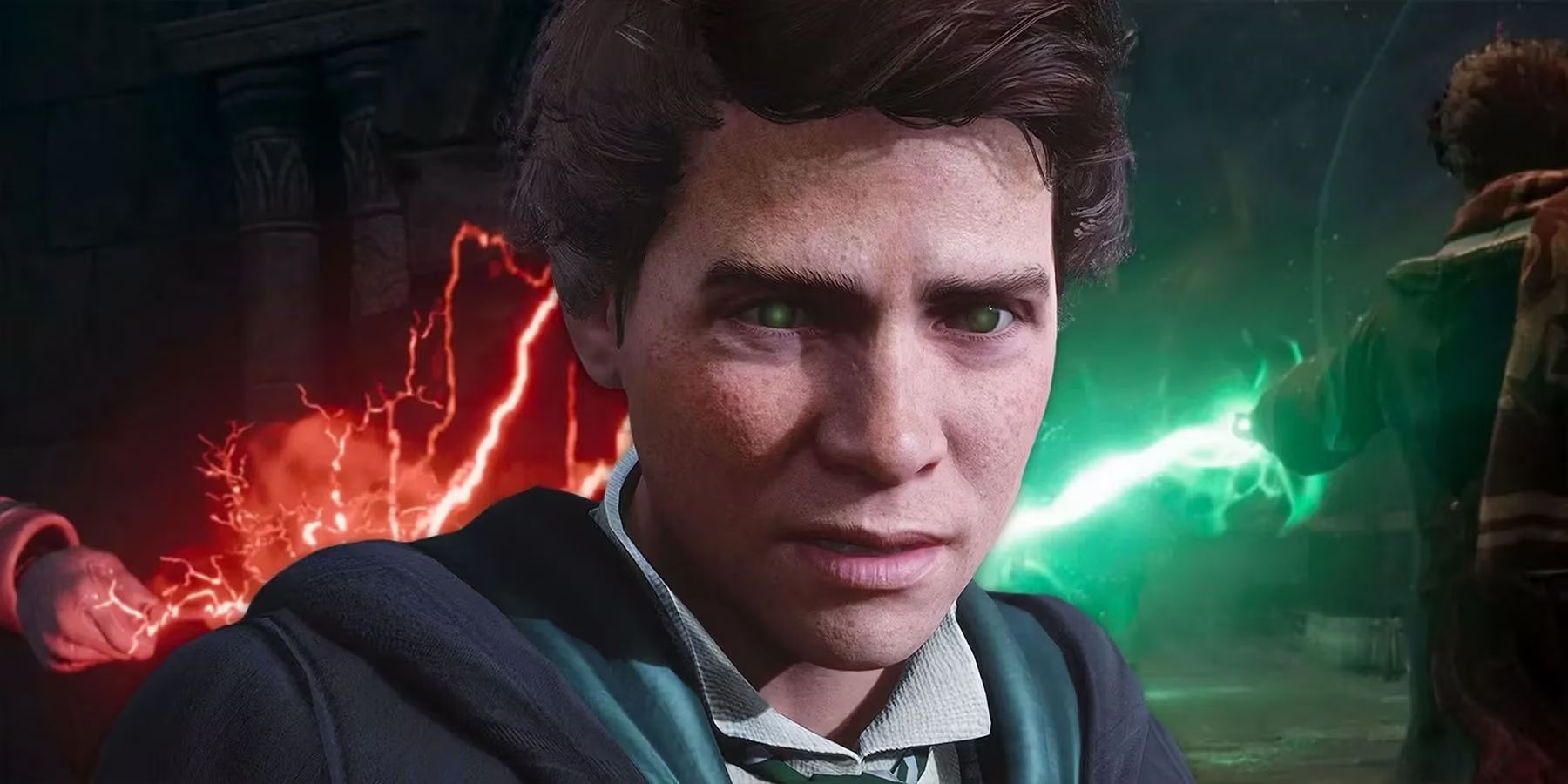
Crucio, Imperio, and Avada Kedavra sit at the dark heart of Harry Potter lore. In the books and films, using any of them on a fellow human being meant a one-way ticket to Azkaban, no question asked. Hogwarts Legacy let players learn these spells through Sebastian Sallow’s side questline and then unleash them without so much as a detention. You could crucio a poacher mid-conversation and walk away, reputation spotless. Naturally, this sparked fierce debate. Purists argued it cheapened the world’s moral fabric. Others enjoyed the freedom to role-play a dark wizard without consequence. Now, in 2026, with a sequel reportedly deep in development, Avalanche faces a critical question: should it reverse course? The studio would be wise to stand by its original decision, because changing it now could do more harm than good.
🔮 The Temptation to Walk Back
After the backlash, it’s understandable that developers might consider introducing a morality system or punishing players for casting the unforgivable curses. A sequel could track every Avada Kedavra and dish out narrative repercussions—teachers might become suspicious, companions could abandon you, or aurors might actively hunt you down. On paper, that sounds like a satisfying compromise. In practice, it opens a narrative can of worms. The first game already established that a fifth-year student can wield the darkest magic ever known without any institutional consequences. If a sequel suddenly decides that the wizarding world cares, it would feel like pandering. It would also create a jarring inconsistency for those who play the two games back-to-back.
Retrofitting Hogwarts Legacy 1 to match a stricter sequel is almost impossible. We’re talking about rewriting quests, re-recording dialogue, and overhauling the entire ending sequence where Professor Fig’s fate remains unaffected by your spell choices. Avalanche is unlikely to patch a years-old game just to align with a new moral compass. So the alternative is to simply ignore the first game’s lore entirely—a move that would frustrate anyone invested in the timeline.
🔄 A Clean Slate: Removing the Curses Entirely
One potential workaround is to set Hogwarts Legacy 2 in a completely different era, perhaps centuries before or after the Victorian setting of the original. By jumping time periods, the sequel could claim that the unforgivable curses weren’t yet classified as unforgivable, or that their usage was strictly monitored. This would allow Avalanche to remove them from the player’s arsenal without contradicting the first game. After all, a new protagonist in a new era wouldn’t have the same access Sebastian provided. The downside is obvious: players who loved the power fantasy would feel stripped of an exciting gameplay element. The curses added a visceral thrill to combat; watching enemies shrivel under a green bolt of light never got old. Taking them away might make the sequel feel sanitized and less engaging.
🧭 The Morality Path Approach
Another idea bouncing around the community is a predetermined morality path. Before starting the game, you could choose to play as a “light wizard” or a “dark wizard.” Light characters would be locked out of the curses entirely, while dark characters could use them—but with severe narrative penalties. Friends would leave, quests would fork, and the ending would reflect your corruption. This system mirrors what many RPGs do successfully, but it requires a branching story of immense complexity. Avalanche would need to essentially write two overlapping narratives, doubling the workload. Given the first game’s limited consequence system (where even asking for more money after quests rarely changed outcomes), betting on a full morality engine feels like wishful thinking.
💡 Why Staying the Course Makes Sense
The simplest path forward is also the most logical: let players continue to use the Unforgivable Curses without punishment, and embrace the chaotic freedom the first game established. Instead of pretending the curses don’t exist or forcing a black-and-white morality system, Hogwarts Legacy 2 could lean into the grey. Imagine companion reactions that are purely cosmetic but entertaining—a Gryffindor roommate who nervously avoids eye contact after you use Crucio, or a Slytherin companion who eggs you on. The game doesn’t have to punish, but it can acknowledge. This soft approach preserves player agency while adding a pinch of flavor, all without rewriting what came before.
Critics might still grumble, but the franchise has already proven that lenient spellcasting didn’t ruin sales or reviews. The first Hogwarts Legacy sold over 30 million copies and remained one of the bestselling games of its year despite the controversy. Fans showed with their wallets that they’re okay with a bit of lore flexibility in exchange for a rollicking good time.
Looking ahead to 2027 or whenever the sequel lands, expectations will be sky-high. People want an expanded wizarding world, not a lecture on magical ethics. Avalanche should double down on what worked: a sprawling open world, deep customization, and yes, the option to feel like the most dangerous witch or wizard alive. The bed has been made—now they should lie in it, and maybe throw in a few darker sheets while they’re at it.
Comments