The gaming world buzzes with anticipation for Hogwarts Legacy 2, yet one burning question remains unanswered: when will the sequel unfold? With Avalanche Software confirming their commitment to tying the game into HBO's upcoming Harry Potter series, speculation runs wild about potential timelines. While the original game’s fifth-year setting hinted at a trilogy covering Years 6 and 7, I can’t help but feel a thrill at the possibility of a bold leap backward—specifically to Hogwarts’ founding era. As a professional gamer, the idea of exploring uncharted magical history electrifies me far more than retreading familiar grounds. This setting promises novelty, deeper lore integration, and a chance to walk alongside legends like Godric Gryffindor and Salazar Slytherin in their prime. The excitement isn't just about nostalgia; it’s about reshaping our understanding of the wizarding world itself.
🏰 The Founding Era: A Fresh Canvas for Adventure
Shifting to Hogwarts' inception circa 993 AD would revolutionize the sequel’s scope. Unlike the late-1800s setting of the first game, this period remains shrouded in mystery, mentioned only briefly in Harry Potter and the Chamber of Secrets. For players like me, who spent hours combing every corner of the castle, a brand-new Hogwarts—pristine, architecturally distinct, and untouched by centuries of magic—would reignite that childlike wonder. Imagine stone corridors gleaming without wear, enchanted staircases in their earliest forms, and secret chambers yet undiscovered. This isn’t a reskin; it’s a reimagining. As a gamer, I crave environments that reward curiosity, and a founding-era castle would deliver exactly that, with fresh puzzles, hidden rooms, and magical mechanics tied to the school’s creation. Plus, avoiding the original map prevents fatigue—a concern many fans share after exhaustive exploration in the first installment.
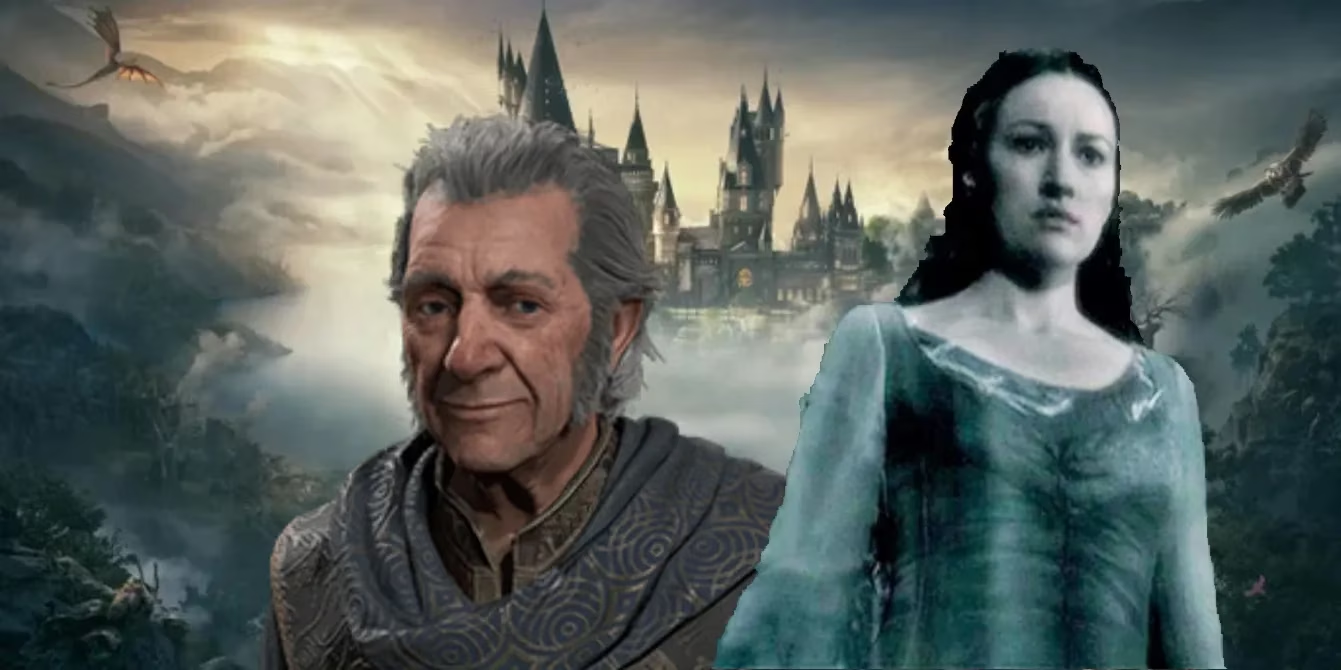
🧙♂️ Meeting the Founders: Gaming’s Ultimate Fan Service
Interacting with Hogwarts’ four founders—Godric Gryffindor, Helga Hufflepuff, Rowena Ravenclaw, and Salazar Slytherin—would be a dream realized for Potter enthusiasts. While lore hints at their eventual fallout, the sequel could depict their collaborative golden age, a dynamic untouched in previous media. Think sparring spells with Gryffindor, brewing potions alongside Hufflepuff, or debating arithmancy with Ravenclaw. For players like me, bonding with these icons would eclipse even the impactful mentorship of Professor Fig. The founders’ distinct personalities—Gryffindor’s daring, Slytherin’s cunning—could influence quests and dialogue, making house choice profoundly personal. Selecting Slytherin? Prepare for private lessons with Salazar himself, deepening your magical prowess in ways Year 5 never allowed. This isn’t just fan service; it’s narrative immersion at its finest. I’d relish every moment uncovering their untold stories, from shared triumphs to simmering tensions before the rift.
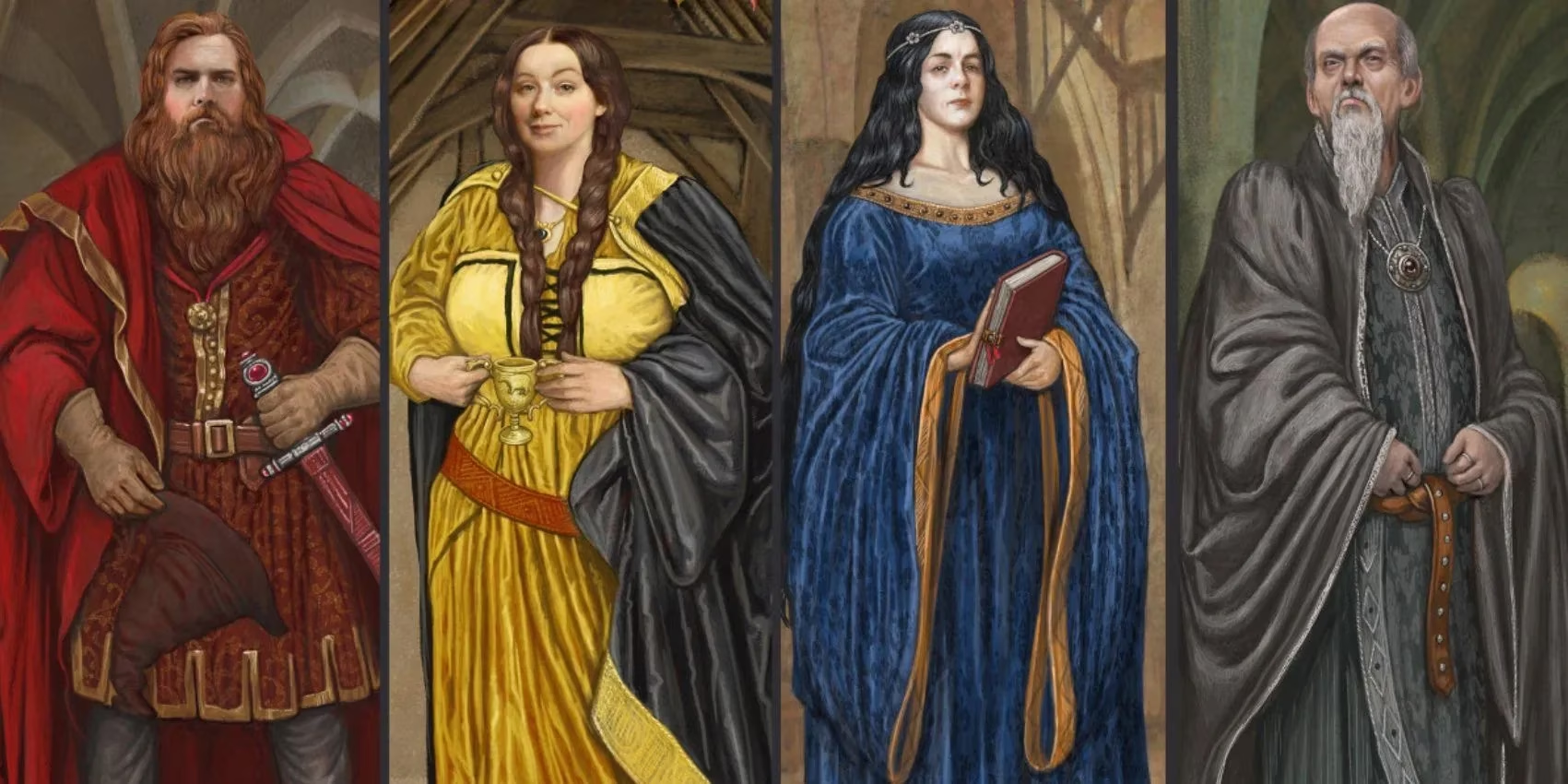
🔮 Bridging Eras: HBO Synergy and Horcrux Lore
A founding-era setting brilliantly dovetails with HBO’s series and Harry Potter’s core mythology. The founders’ artifacts—like Ravenclaw’s diadem or Hufflepuff’s cup—became Voldemort’s Horcruxes, while Gryffindor’s sword destroyed them. Exploring these objects’ origins could weave a thrilling prelude to the HBO narrative. Imagine quests where Rowena enchants her diadem or Helga forges her cup, revealing how dark magic corrupted them centuries later. As a lore enthusiast, I’d be captivated by subtle foreshadowing—a glance between Slytherin and Gryffindor hinting at future conflict. Moreover, the sequel could expand on Hogwarts Legacy’s Ancient Magic, delving into its raw, untamed forms during a less-regulated era. This timeline also connects to Harry and Voldemort, both heirs to founders, offering fresh perspectives on their legacies. For HBO, this synergy is marketing gold—a game that enriches, not replicates, the show’s universe.
💫 Personal Reflections: Why This Era Resonates
As a gamer, few concepts excite me like founding-era Hogwarts. It combines uncharted exploration with intimate character depth. Walking those nascent halls would feel transformative—a stark contrast to the first game’s established grandeur. Forming bonds with the founders wouldn’t just be quests; it’d be emotional storytelling, humanizing myths we’ve only heard in Sorting Hat songs. And let’s address the elephant in the room: avoiding the "Hogwarts fatigue" that sequels risk. This pivot isn’t evasion; it’s evolution. The thrill of discovery, paired with HBO tie-ins, could make Hogwarts Legacy 2 a benchmark for franchise storytelling.
In closing, the founding era isn’t merely a clever setting—it’s the heartbeat of what Hogwarts Legacy 2 could achieve. Just as the original game left us yearning for more magic, this sequel could redefine Potter’s boundaries, tying elegantly into HBO’s vision while honoring the saga’s roots. For gamers and fans alike, stepping into Hogwarts’ dawn wouldn’t just be a new chapter; it’d be a spellbinding beginning.
Comments