I never expected a school for witchcraft and a lush alien moon to share the same narrative fate, but looking back from 2026, that is exactly what happened. The year 2023 was an absolute powerhouse for licensed video games, and I spent most of it bouncing between a magical castle and a bioluminescent frontier. Star Wars Jedi: Survivor grabbed headlines, The Legend of Zelda: Tears of the Kingdom rewrote open-world rules, and Final Fantasy XVI brought cinematic action, but two titles stood out to me for a different reason: Hogwarts Legacy and Avatar: Frontiers of Pandora.
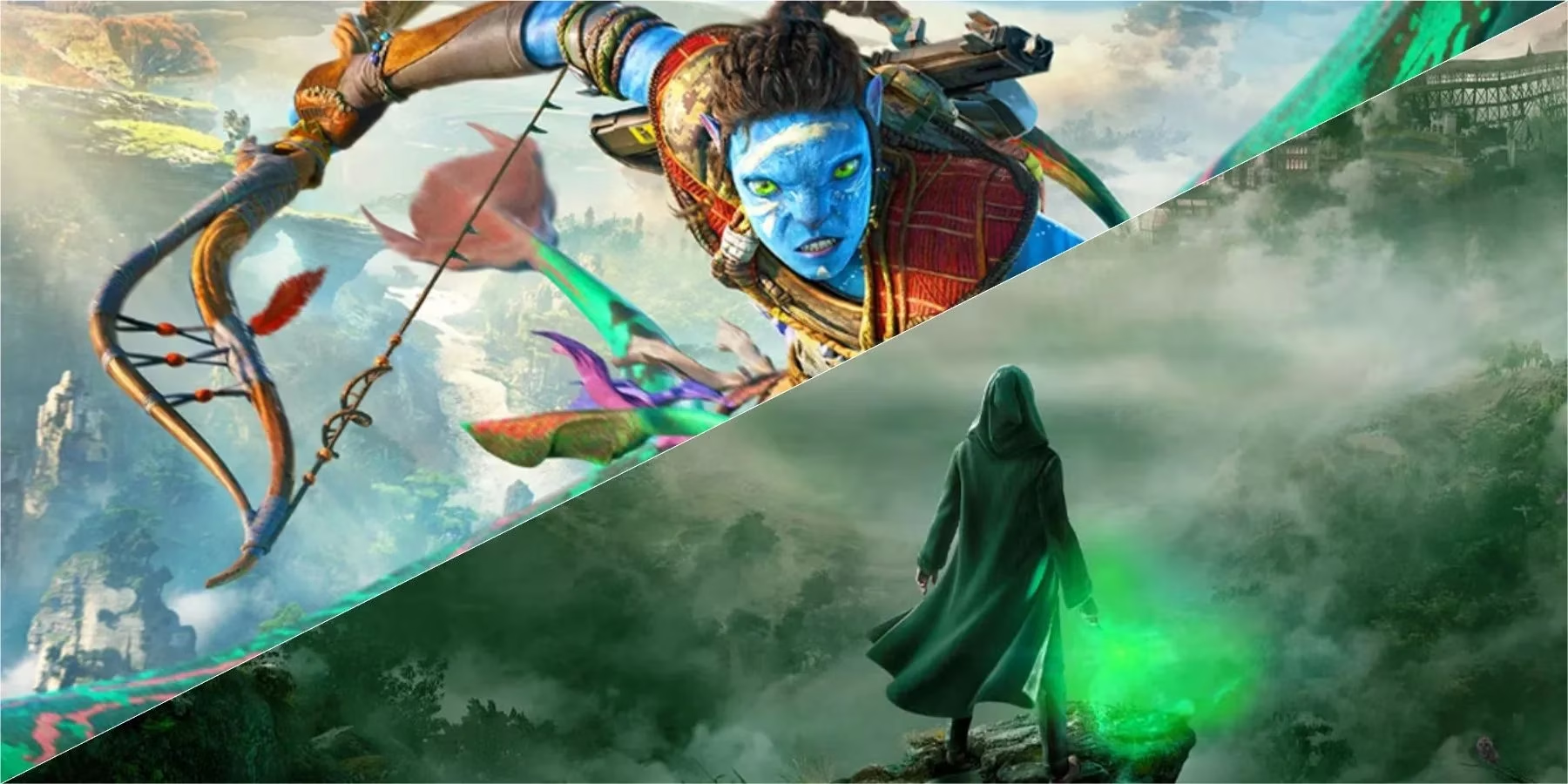
From the moment Hogwarts Legacy released in February 2023, I watched it become a commercial monster. Within just two weeks, it had moved 12 million copies. When the Xbox One and PlayStation 4 versions arrived, the total climbed past 15 million. Even after Zelda, Star Wars, Final Fantasy, and Call of Duty: Modern Warfare 3 entered the arena, the Wizarding World adventure clung to its best-selling crown. That kind of staying power is rare, and as someone who follows the industry closely, I could hardly believe it. The game made me feel like I had finally received my Hogwarts letter, and apparently millions of other players felt the same.
Avatar: Frontiers of Pandora was not in the same sales stratosphere, but I saw it make a respectable landing. According to UK physical sales charts from GfK, the game debuted at number five. That is a solid start for a blue-skinned alien adventure, especially when digital sales were not even counted in those figures. Ubisoft's take on Pandora gave fans a chance to explore the Western Frontier, bond with an Ikran, and fight the RDA, and for many people that fantasy was enough. I remember soaring over the Kinglor Forest for the first time and thinking that the world itself was worth the price of admission.
Still, the more I played both games, the clearer it became that they were stranded in the same boat. Their critical reception was decent, but neither was perfect. If sequels were going to happen — and after such commercial results, they felt inevitable — the development teams would need to go above and beyond to fix the rough edges. Otherwise, the follow-ups would feel like cheap franchise cash grabs rather than genuine evolutions. Both games proved that a beloved IP can open the door, but they also showed that lasting appeal requires more than a familiar name.
For Hogwarts Legacy, I saw the most frequent complaints center on its RPG mechanics. Fans wanted more gear variety, more interesting quest types, deeper companion relationships, and a stronger emphasis on actually being a student at Hogwarts. The castle was stunning, but the systems around it sometimes felt shallow. A sequel would need to add player agency in the classroom, richer house identity, and companions who actually mattered beyond a few side moments. Some of the most requested improvements included:
-
More meaningful gear types and loot progression
-
New quest structures beyond simple collectibles
-
Deeper companion relationships and dialogue
-
A stronger school simulation with classes, houses, and daily student life
For Avatar: Frontiers of Pandora, the criticism leaned toward Ubisoft's familiar open-world formula. The map was gorgeous, but it followed the same tower-clearing, outpost-conquering rhythm I had seen for a decade. The story also felt like a spiritual retelling of the first Avatar film, with familiar beats about an outsider discovering Na'vi culture and fighting a corporate military force. A sequel would need narrative originality and more distinctive open-world mechanics. The features I would most want to see changed include:
-
Less reliance on outpost clearing and repetitive map markers
-
A story that moves beyond the first film's template
-
More original Na'vi cultural systems and clan dynamics
-
Broader open-world activities that feel native to Pandora
Here is a quick comparison I often think about when discussing these two licensed giants:
| Title | Biggest Strength | Main Criticism | Sequel Priority |
|---|---|---|---|
| Hogwarts Legacy | Magical open-world castle | Shallow RPG systems | Deeper role-playing and school simulation |
| Avatar: Frontiers of Pandora | Stunning alien world | Ubisoft formula and recycled plot | Fresh open-world design and original story |
That table captures why these two titles are connected in my mind. They both proved that massive entertainment franchises can still dominate the gaming space, but they also showed that critical success and commercial success do not always align perfectly. A loyal fanbase can forgive rough edges for a while, but sequels need to address those shortcomings to stay relevant.
As 2026 unfolds, I still think about those 2023 lessons. The industry has moved fast, and licensed adaptations have become even more common. Yet the same rule applies: a beloved IP will get players through the door, but only thoughtful design will keep them inside. Hogwarts Legacy and Avatar: Frontiers of Pandora both delivered the fantasy their fans wanted, and both now face the same sequel challenge. If their next chapters embrace deeper role-playing, stronger companions, original storytelling, and less formulaic open-world design, they could become more than sales champions. They could become genuine masterpieces.
Comments