As a dedicated player immersed in the magical world since 2023, I believe the upcoming substantial DLC for Hogwarts Legacy is one of the most anticipated expansions in recent gaming memory. The 2023 RPG from Avalanche Software captivated us with its breathtaking attention to detail, allowing us to forge our own path at Hogwarts School of Witchcraft and Wizardry. While the absence of Quidditch, the iconic broomstick sport, was a notable omission at launch, the recent lukewarm reception to dedicated Quidditch titles suggests the DLC would be far better served by fleshing out other original characters or exploring unseen corners of the wizarding world. The empty Quidditch field on the game's grounds stands as a silent monument to what could have been, but perhaps it's a monument best left undisturbed.
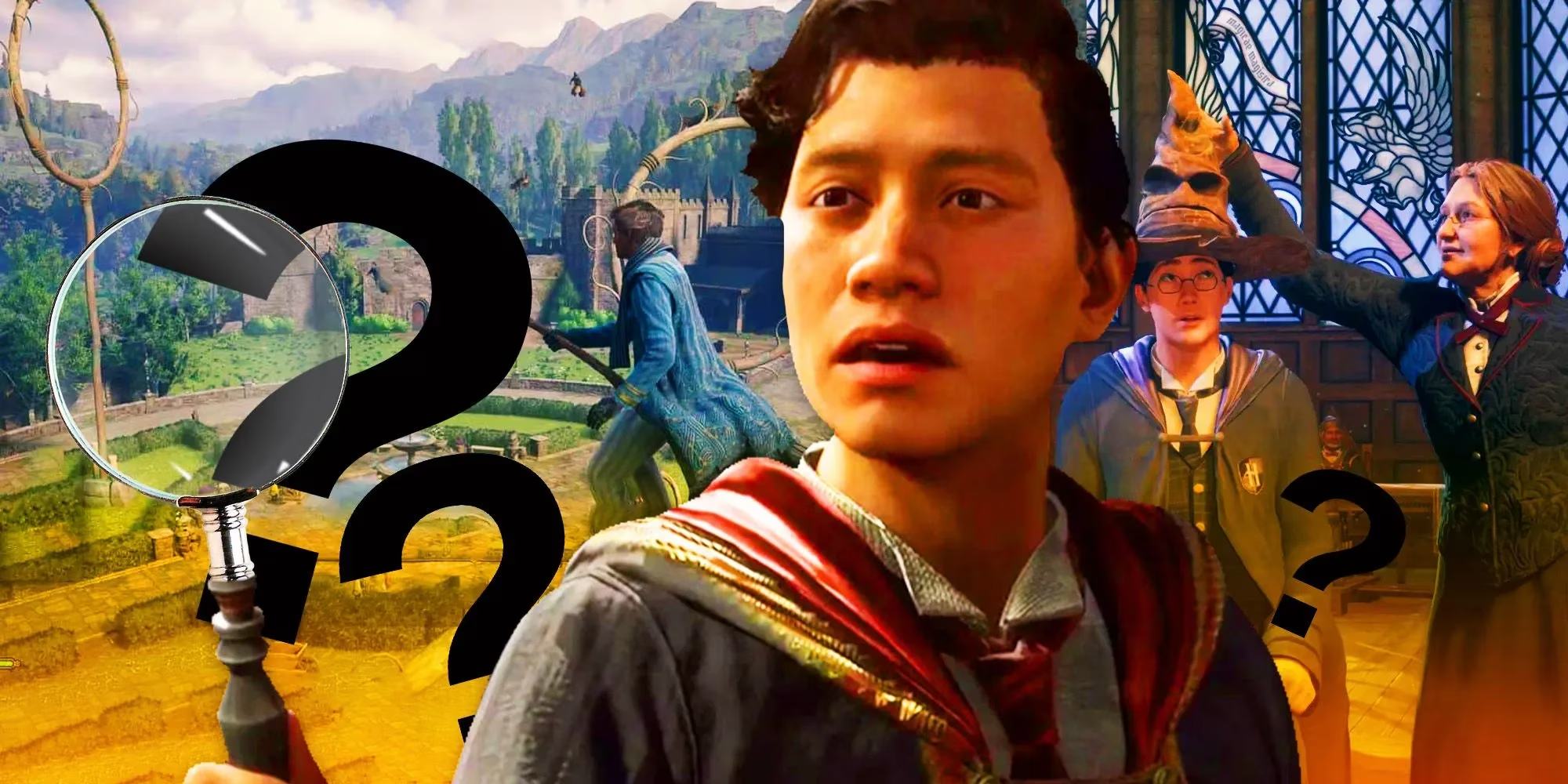
The Fundamental Flaws of Translating Quidditch
From my experience and that of the community, Quidditch isn't actually that fun of a game to play in a video game format. The depictions in the Harry Potter series are thrilling because we follow Harry Potter in his pivotal role as the Seeker. This position uniquely allows the narrative to ignore the broader match and focus solely on the cinematic chase for the elusive Golden Snitch. In a player-driven game, this presents a colossal design hurdle. A rumored DLC would need to make players the Seeker, which translates to chasing an erratic objective around a limited map—a concept that sounds tedious with Hogwarts Legacy's existing broomstick mechanics.
Conversely, if players were cast as Chasers or Keepers, they would be stuck waiting for the NPC Seeker to ultimately decide the match by catching the Snitch. This removes player agency and makes the majority of the gameplay feel inconsequential. Furthermore, Quidditch wouldn't have added much to the story. Canonically, matches are only played a few times per school year. Integrating them into Hogwarts Legacy's already packed schedule—which includes dueling practice, decorating the Room of Requirement, and attending classes—would have felt like a disruptive, forced mini-game rather than a meaningful narrative expansion.
The Market Has Spoken: Quidditch's Standalone Struggles
The evidence against a Quidditch-focused DLC extends beyond game design theory. Harry Potter: Quidditch Champions, released to fill this very gap, has had a lukewarm reception after its initial launch. Player engagement data tells a clear story:
-
Peak Concurrent Players (Launch): ~3,977
-
Current Daily Players (2026): ~200-300 (a slow plateau)
This steep decline demonstrates that while fans theoretically clamor for a solid Quidditch simulation, they don't have much continued interest in actually playing it. The novelty wears off quickly when the core loop fails to captivate. Since Quidditch as a standalone game has failed to capture a solid audience, there's no reason to believe the Hogwarts Legacy DLC would fare any better. Pouring precious development resources into a mode with proven limited appeal would be a misstep for Avalanche Software.
A Blueprint for a Superior DLC Experience
So, where should the DLC focus? The magic of Hogwarts Legacy lies in its world-building and role-playing depth. A successful expansion should double down on these strengths. Here are avenues far more promising than Quidditch:
-
Deepened Character Arcs: Flesh out the stories of original characters like Sebastian Sallow, Poppy Sweeting, or Natsai Onai. Give us quests that explore their futures or pasts in greater detail.
-
New Locales & Mysteries: The map hints at so much more. Let us explore:
-
The mysterious depths of the Ministry of Magic.
-
A fully realized Diagon Alley or Knockturn Alley.
-
Other wizarding schools like Ilvermorny or Uagadou.
-
-
Advanced Magical Specialization: Introduce new talent trees or specializations that allow for deeper role-playing, such as becoming an Auror-in-training, a Magizoologist, or a Curse-Breaker.
-
Morality & Consequences: Expand the game's morality system with choices that have more profound, visible impacts on Hogwarts, Hogsmeade, and our relationships with companions.

The Verdict from the Stands
As we look to the future in 2026, the path for Hogwarts Legacy is clear. The empty Quidditch pitch should remain a scenic backdrop—a reminder of a beloved but impractical fantasy. The game's soul is not in competitive sports, but in the wonder of discovery, the growth of a witch or wizard, and the secrets hidden in ancient castle walls. A DLC that gives us more of that—more story, more world, more magic—is the expansion this masterpiece truly deserves. Let's hope Avalanche Software listens to the lesson taught by both their own design constraints and the market's response: sometimes, the most magical choice is to leave some spells uncast and explore uncharted territories instead.
Data referenced from SteamDB helps contextualize why a Quidditch-centric direction may not be the smartest use of a major Hogwarts Legacy DLC: sustained player interest often shows up clearly in long-term concurrency trends, and steep post-launch drop-offs typically signal that a mode’s novelty doesn’t translate into a durable gameplay loop—supporting the argument that Avalanche would be better off investing in deeper storylines, new locations, and richer role-playing systems instead of a sports add-on.
Comments