In 2026, the video game industry still remembers one of the most talked-about award season omissions in recent memory: Hogwarts Legacy received zero nominations at The Game Awards 2023. The open-world Harry Potter action-RPG launched in February 2023 to mostly positive reviews and became the best-selling new video game release of that year. Yet when the nominee list arrived, the game was nowhere to be found. How could a commercial juggernaut and critical darling be completely shut out? 🤔
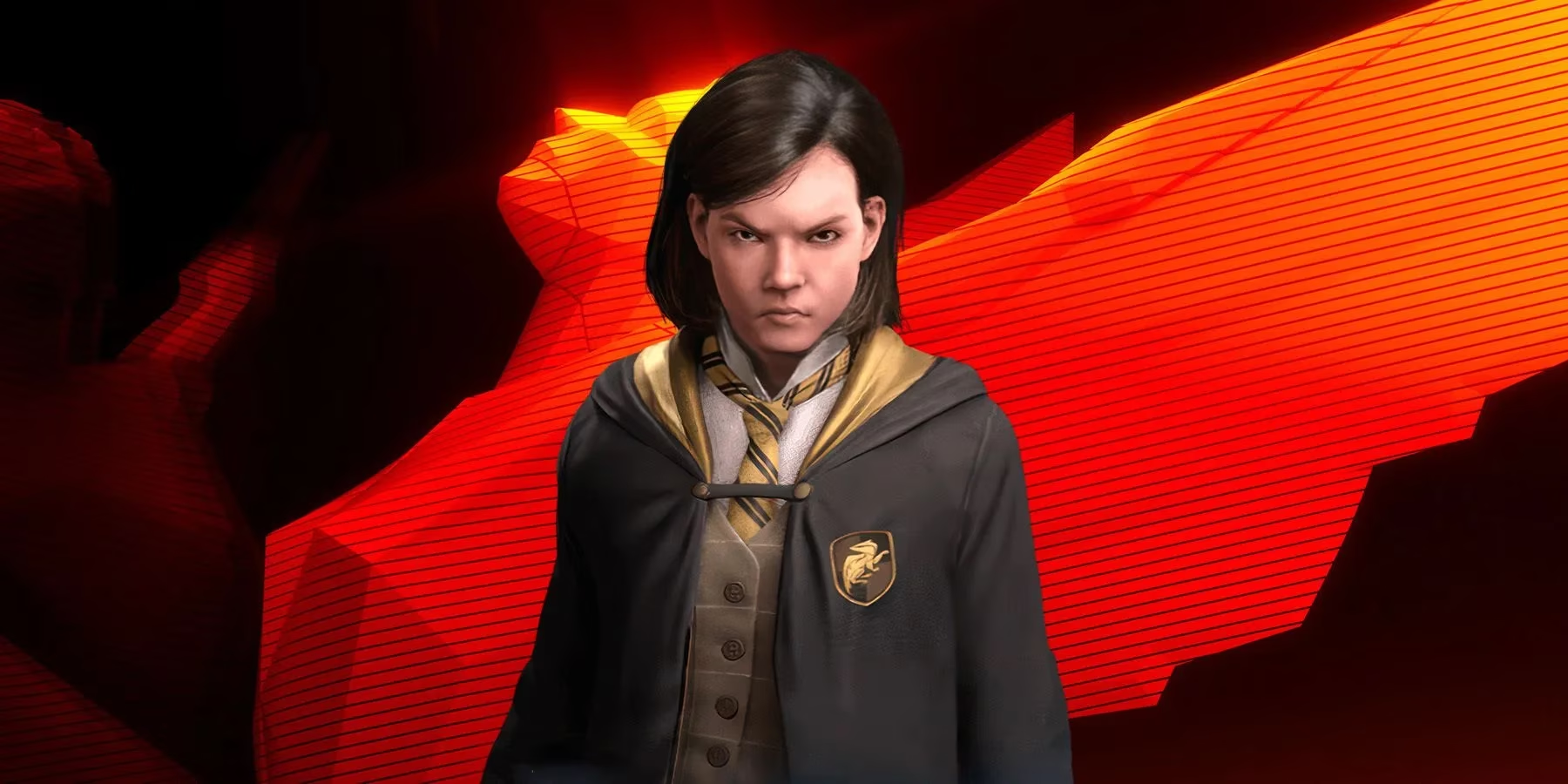
Hogwarts Legacy found immense success on PC, PlayStation 5, and Xbox Series X before continuing its momentum on PS4 and Xbox One later in 2023. The Nintendo Switch version was still unproven at the time of the awards discussion, but on other platforms the game was widely praised by critics and players alike. Its rich recreation of the wizarding world, combat, and musical score earned strong word-of-mouth. So why did The Game Awards jury overlook it entirely?
The omission was especially glaring because 2023 was stacked with acclaimed releases. Many fans did not assume Hogwarts Legacy would earn a Game of the Year nod, but they were surprised it missed every category. Observers argued it could have fit several races, including Best Art Direction, Best Score & Music, Best Audio Design, and Best Role Playing Game. The snub became even more egregious when the Grammys recognized Hogwarts Legacy's Score & Music as exceptional, earning a nomination at that long-running award show. If music voters saw value, why not gaming voters?
There was no official statement explaining the shutout, but two explanations emerged as most likely. The first was simple: the people who voted on the nominee list may not have thought Hogwarts Legacy deserved a nod in any category. The second was more complicated: the game may have been left off because of its divisiveness. While Hogwarts Legacy reviewed well and was praised for what it accomplished as a video game, the Harry Potter brand is forever tied to controversial creator J.K. Rowling. Including the game would likely have caused serious backlash that could have overshadowed the entire show and ruined the night for other nominated games.
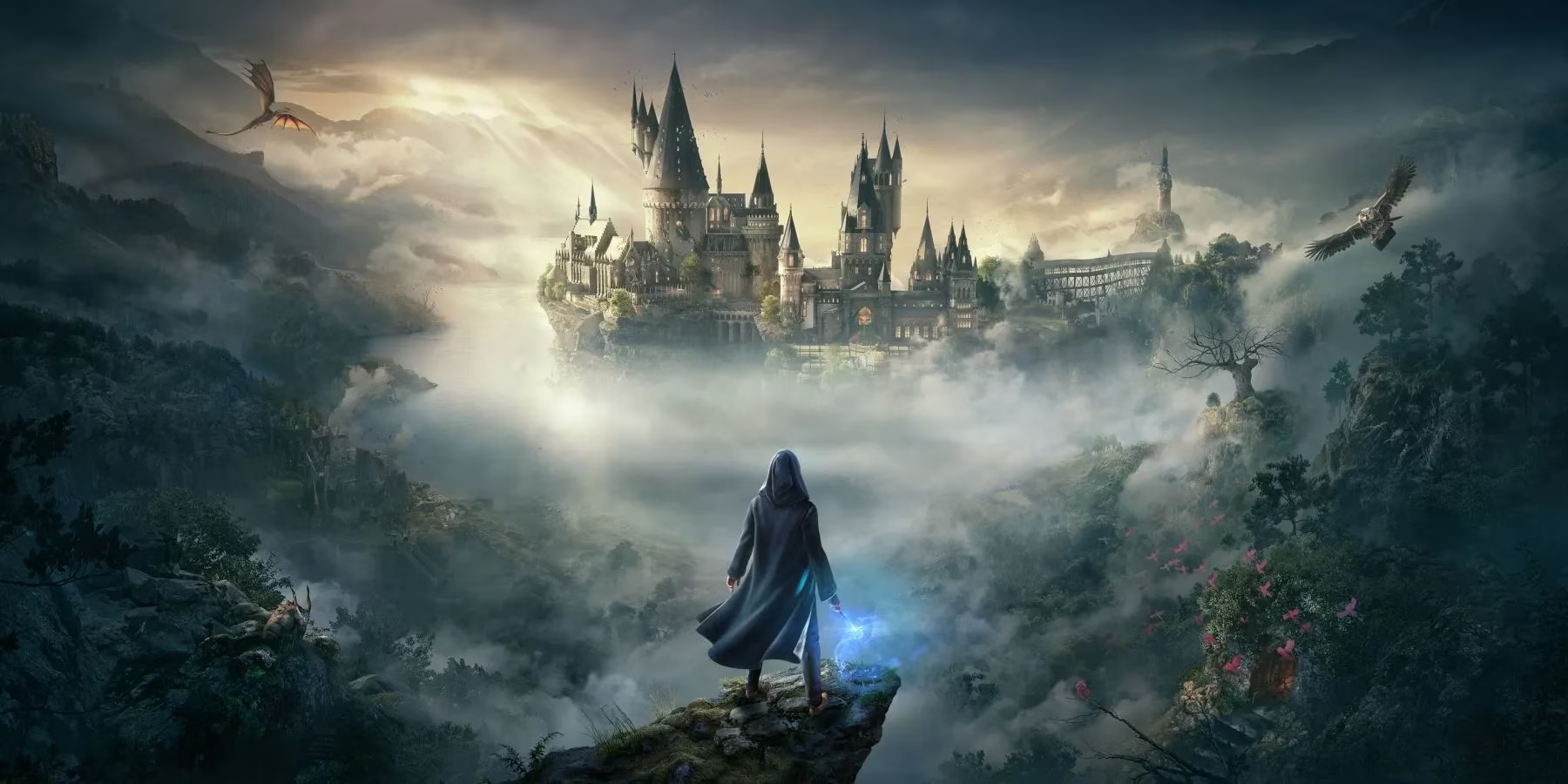
Of course, the truth could be a combination of both possibilities. Voters may have believed the game did not merit nomination in specific categories, while also being aware that any recognition would spark controversy tied to Rowling rather than the game itself. That tension between artistic merit and brand association became a defining story of the 2023 awards cycle.
Potential categories and arguments:
| Category | Why Hogwarts Legacy had a case |
|---|---|
| Best Art Direction | Detailed Hogwarts castle, Hogsmeade, and magical environments |
| Best Score & Music | Grammy-nominated soundtrack and memorable themes |
| Best Audio Design | Spell effects, creatures, and ambient wizarding world sound |
| Best Role Playing Game | Deep RPG systems, character progression, and open-world exploration |
The backlash and debate did not fade quickly. In 2026, award shows continue to grapple with how to handle games connected to controversial figures. Fans still ask whether juries should evaluate a game solely on its craft or consider the broader cultural context around its IP. The Hogwarts Legacy case did not settle that question; it intensified it. 🎮
It also highlighted a harsh reality of award season: popularity and sales do not guarantee recognition. A game can top charts, please millions, and still be absent from the categories that matter most to its creators. The Game Awards has snubbed major titles before, and it will likely do so again. Every awards body makes choices that frustrate some part of its audience.
For Hogwarts Legacy, the 2023 snub remains a notable chapter in its legacy. It was a best-seller, a fan favorite, and a cultural lightning rod. Whether it was ignored for quality reasons, political reasons, or both, the result was the same: zero nominations. As the industry moves further into 2026, the question lingers—can a game tied to a controversial creator ever be judged purely on its own merits? The answer, at least for now, appears to be no. 😶
Comments