When I first wandered the torchlit corridors of Hogwarts Legacy back in 2023, I never expected that a grumpy old headmaster peering from a gilded frame would become the thread linking two generations of wizarding stories. Yet here we are in 2026, with HBO’s faithful Harry Potter remake finally streaming, and I can’t stop thinking about one unforgettable character that both the books and the video game gave us, but the movies shamefully ignored: Phineas Nigellus Black. The game felt like stepping into a living, breathing tapestry where every stone whispered secrets, but that portrait—sneering down with pureblood disdain—was like a stubborn knot in the weave, refusing to be smoothed away.
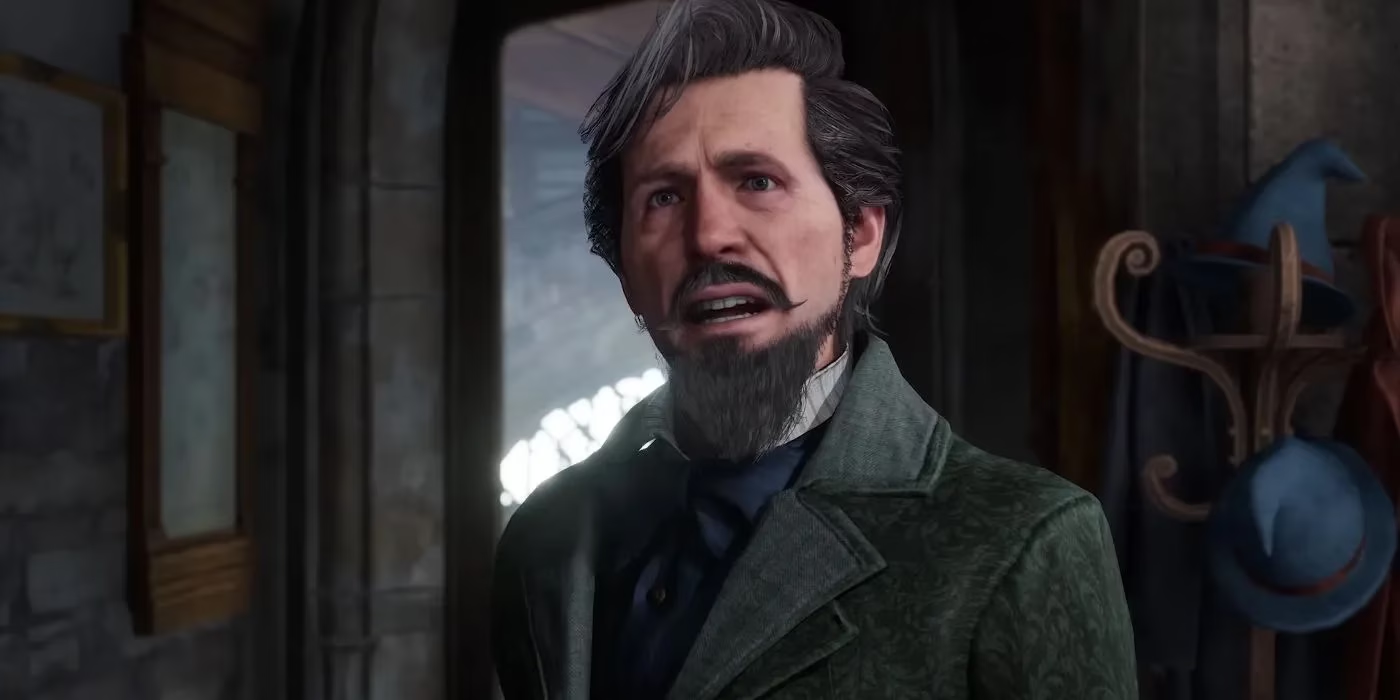
I still remember my first encounter with him. I had just brewed a particularly tricky Wiggenweld Potion, and as I trotted past the headmaster’s office, his voice cut through the ambient crackle of torches like a rusty door hinge. He complained about the “dilution of magical blood” and yearned for the days when students were seen and not heard—preferably not seen either. In that moment, I loathed him. But now, looking back, I realize the game was handing me a key to a much larger story. Phineas Nigellus Black wasn’t just a grumpy Slytherin relic; he was a character who, in the books, became a bizarrely loyal piece of the resistance against Voldemort. His portrait, hanging both in Hogwarts and in Number 12 Grimmauld Place, acted as a magical telegraph during the darkest hours, ferrying messages like a two-headed owl with a dry, cynical beak.
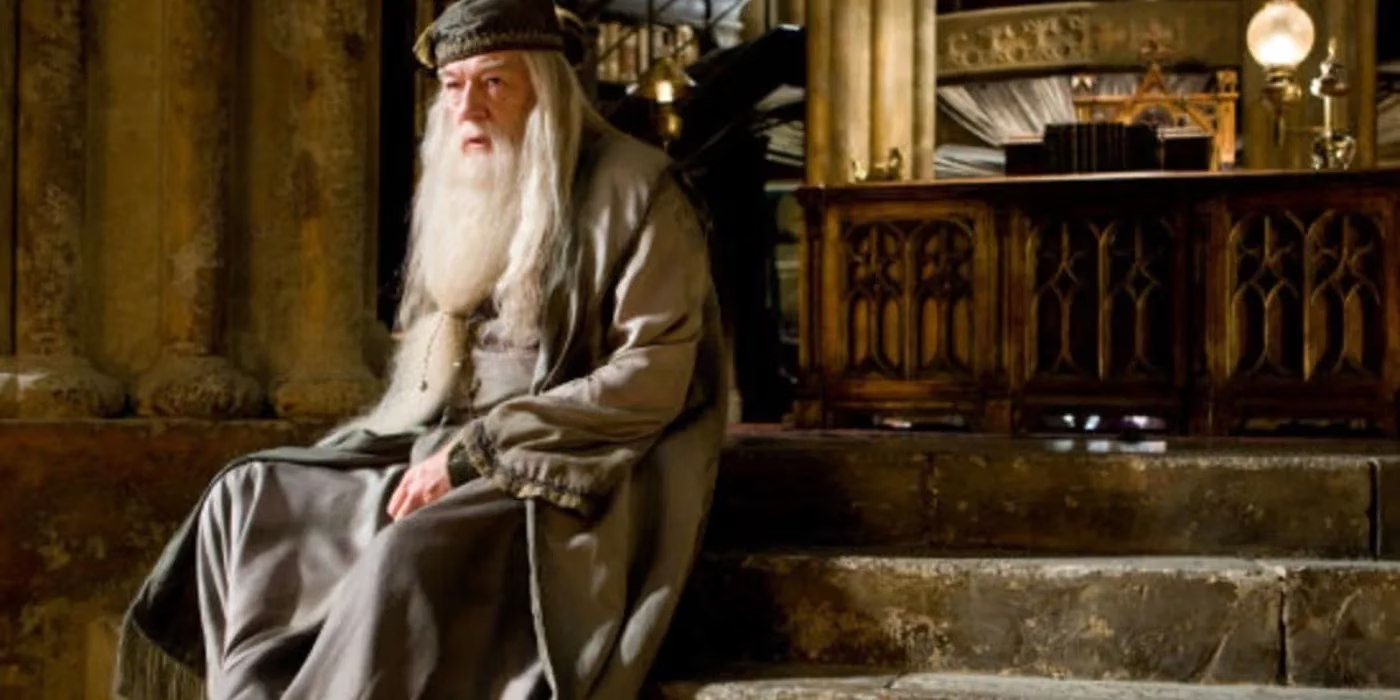
The films omitted him entirely, and that left a gaping plot crater in Deathly Hallows. How did Snape know where to find Harry to deliver the Sword of Gryffindor? In the book, Hermione accidentally reveals their location while carrying Phineas’s portrait in her beaded bag, and the old headmaster—bound by the strange laws of painted magic—faithfully reports to Snape. The movies never explained it, and for years that bothered me like an itch under a prosthetic ear. Now, with HBO returning to the books with monastic devotion, that wound can finally heal. The new series simply must include Professor Black, and I’m not alone in hoping that the actor who brought him to life in the game might reprise the role.
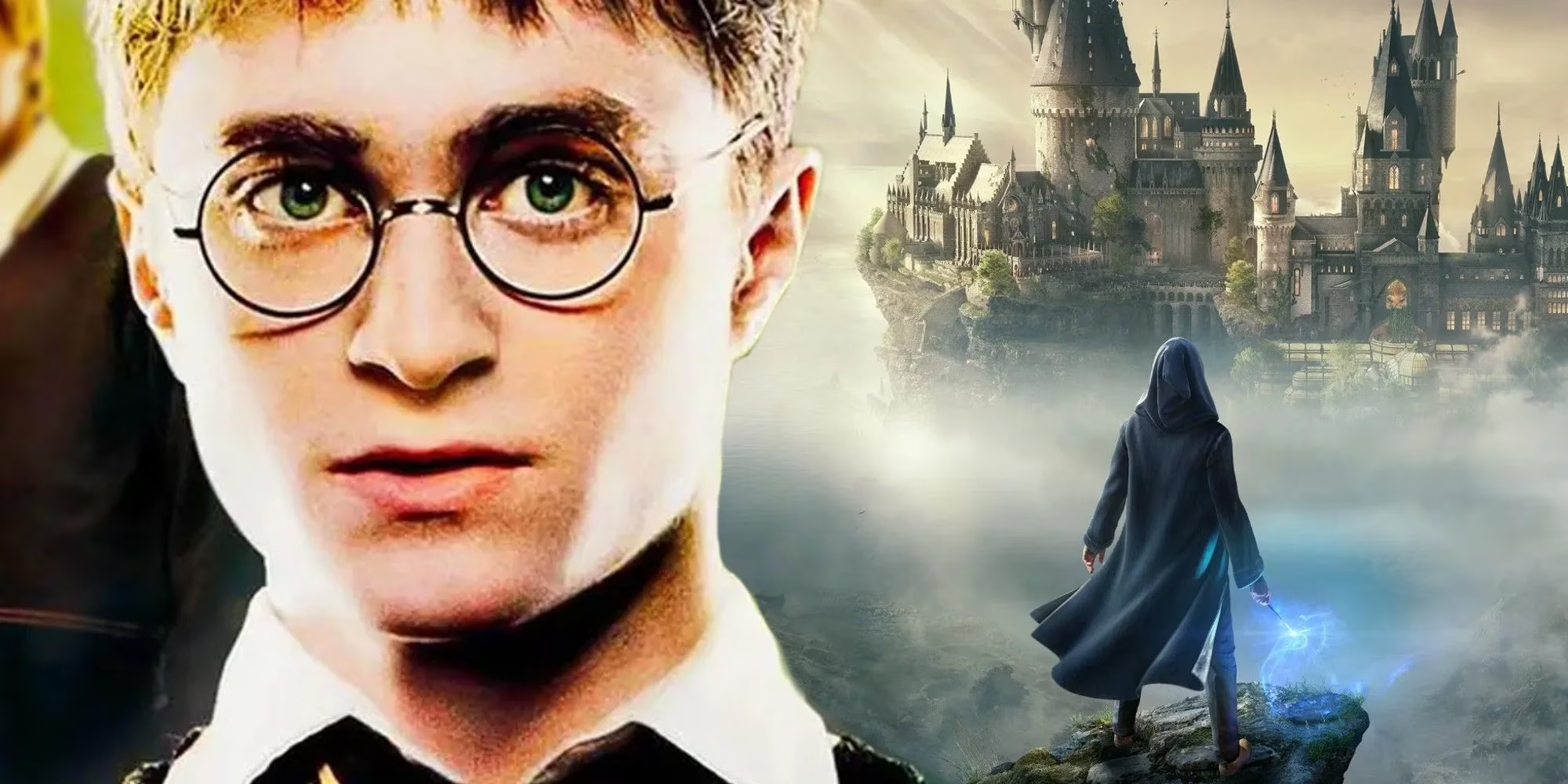
Simon Pegg’s voice was a revelation—dry, acerbic, and layered with the weary superiority of a man who had been dead for decades but still insisted on giving unsolicited advice. Casting him in the TV remake would be like relighting a candle that already smells of parchment and old secrets. Unlike bringing back original film actors, Pegg never interacted with Harry, Ron, or Hermione on screen; he’s a clean slate, a familiar face from a parallel magical timeline. By letting him cross into the HBO series, the production could forge a subtle link to Hogwarts Legacy’s enormous success, acknowledging that the game, too, is part of the Wizarding World’s living ecosystem. It would be a small gesture, like leaving a chocolate frog card on a nightstand—unnecessary but deeply satisfying.
Of course, Phineas in the TV show will have to be slightly different from the man I met in the 1890s. In the game, he was an antagonistic roadblock, a symbol of the pureblood arrogance that festered in the school. But the book version, as a portrait, was bound to serve the current headmaster. Dumbledore’s office housed a council of painted souls who, despite their personalities, could not lie or rebel against the living occupant. When I think about this transformation, it reminds me of a river that changes character at a dam—same water, but its wild rush becomes a controlled, purposeful flow. So, while I delighted in despising him in Hogwarts Legacy, in the remake he will need to be untrustworthy in tone yet utterly reliable in function. That contrast is the secret sauce of his character—a prejudiced Slytherin who, by the magical programming of his portrait, becomes an accidental ally in the fight against darkness.
There’s more than just Phineas to consider. The game’s portrait gallery and ghostly halls were voiced by a small, talented troupe whose voices have already seeped into our collective imagination. Enn Reitel’s Sir Cadogan—brave and absurdly chivalrous—could seamlessly transfer to the TV series, a delightful comic relief that the films sorely missed. Jason Anthony voiced Peeves, Nearly Headless Nick, and even the Sorting Hat, building a spectral choir that fans have already come to love. Imagine hearing those exact voices in the new series; it would be like stumbling upon a familiar melody in a different key, nostalgia reborn with fresh purpose. The new adaptation is like a grand musical arrangement being rebuilt from the original sheet music, and these actors could provide the harmonies that echo between media.
As a player, I felt a raw connection to Hogwarts Legacy that the films never fully offered—a sense of inhabiting the castle on my own terms. The game was a time capsule unsealed, a quiet, dusty afternoon in a sunbeam-filled corridor. The 2026 series promises to be something similar: a chance to dwell in the minutiae of the books, to watch Harry not just as a cinematic hero but as a boy navigating a world rich with forgotten portraits and whispered histories. Including Phineas Nigellus Black, and perhaps others from the game’s cast, would not just patch a plot hole; it would weave a tapestry that stretches across time, connecting the 1890s, the 1990s, and the 2020s. I’ll be watching with bated breath when that first portrait speaks, hoping to hear a familiar, grumpy drawl that reminds me of my own journey through those enchanted halls.
Comments