As I reflect on my journey through the wizarding world of Hogwarts Legacy in 2026, I can't help but feel a familiar pang of disappointment. The game's world, shimmering with the magic and potential I've always loved about Harry Potter media, often felt like a beautifully painted portrait where the subjects never truly came to life. The castle's halls echoed with possibilities, yet the stories and people within them frequently fell into the same trap as other parts of the franchise: an overly simplistic, black-and-white morality that flattened its rich universe into a two-dimensional tapestry. If Avalanche Software truly wants its sequel to soar on a Firebolt rather than stumble on a Cleansweep, it must weave a more mature and nuanced narrative thread, starting with the very characters who inhabit its world.
The Core Issue: One-Dimensional Characters
One of the most significant ways Hogwarts Legacy 2 could build a better, more immersive game world is by strengthening its character writing. Looking back, I recall how many figures from the first game felt like entries in a simple textbook—clearly labeled as 'good' or 'evil,' their motivations as thin as a single sheet of parchment. Ranrok, for instance, started with grievances that resonated, a goblin's struggle that made historical sense. Yet, this complexity was abruptly vanishing-spelled away, replaced by a generic, inexplicable lust for power that erased all prior depth. This spate of weak characterization made the exceptions, like Sebastian Sallow, shine all the brighter precisely because they were the rare few who existed in the grey. Sebastian did terrible things, yet his heart was in a relatable, if misguided, place. He was a character, not a caricature. The sequel needs to extend this treatment to its entire cast, transforming them from flat archetypes into living, breathing witches and wizards.
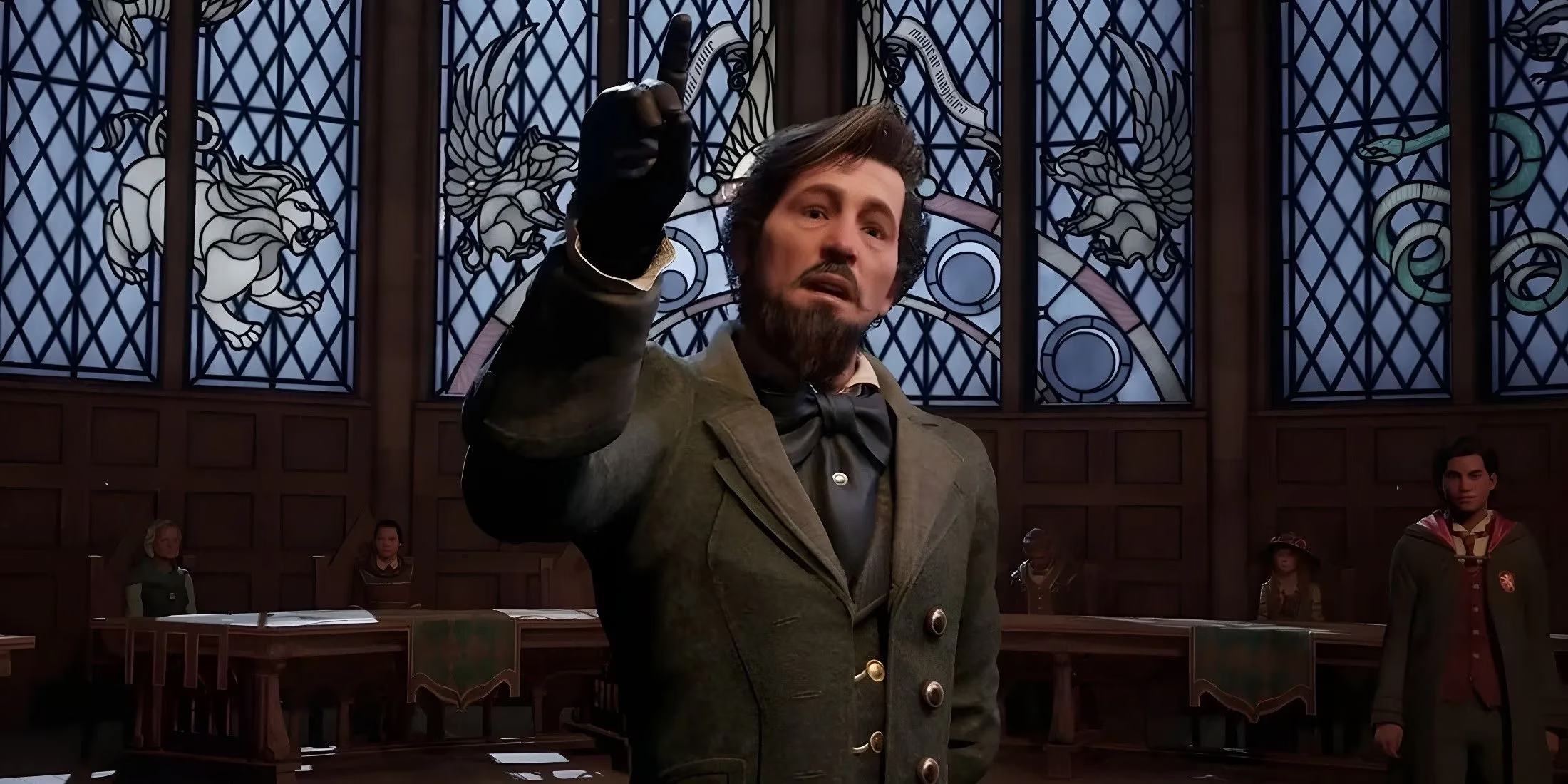
The Case of Phineas Nigellus Black: A Wasted Ancestor
A prime candidate for this narrative alchemy is Headmaster Phineas Nigellus Black. As an ancestor of the beloved, rugged Sirius Black, his presence was a thrilling connection to the original saga. In the Harry Potter books, his portrait was snide, rude, and selfish—a man more concerned with his own comfort and bloodline purity than grand evil. He wasn't a Death Eater; he could even grudgingly understand the heroes' fight, like a cynical old owl observing a battle of rodents from a high, safe branch. Yet, in Hogwarts Legacy, he was rendered almost cartoonishly unlikeable: weak, foolish, and close-minded, a portrait whose varnish had cracked to reveal nothing of substance beneath.
This portrayal, while aligning with his title as Hogwarts's "least popular headmaster," made him implausible and, frankly, boring. His clear disdain for non-human magical beings somehow didn't translate into concern over a nascent Goblin Rebellion—a contradiction that felt less like character complexity and more like a writing oversight. He became just another minor antagonist in the franchise's tradition of creating wholly despicable figures, as easy to revile as Dolores Umbridge's sickly-sweet voice or Peter Pettigrew's cowardice.
Weaving a More Complex Tapestry
But what if Hogwarts Legacy 2 dared to be different? The game shouldn't make us like Phineas Black. His wizarding racism and absurd decisions (like canceling Quidditch for a year over one injury) are rightfully condemned. However, we should be allowed to understand him. Giving us a glimpse into his psyche wouldn't excuse his behavior but would explain it, turning him from a simple villainous silhouette into a multifaceted, believable person. This is where the sequel can truly honor the deeper philosophy of the Harry Potter world.
I remember Sirius Black's poignant lesson to Harry: "The world isn't split into good people and Death Eaters." Yet, so much of the storytelling, including the first game, often contradicts this very idea. Hogwarts Legacy 2 has a golden opportunity to finally reflect this truth. We could see:
-
His Reverence for Family: What does the Black family legacy truly mean to him? Is it a burden or a pride he clings to like a tarnished family crest?
-
The Source of His Fear: Why is he so protectively insular about wizardkind? Is it rooted in a specific trauma, a fear of loss, or a twisted sense of duty preserved like a pickled newt in a jar?
Exploring these facets would make him more than a plot obstacle. It would make the world feel real, where people are products of their history and choices, not just assigned moral alignments.
A Blueprint for the Sequel's Cast
Headmaster Black should be the starting point, not the end goal. By applying this depth-first approach, Hogwarts Legacy 2 could present a cast that feels thoughtfully crafted. Imagine a world where:
-
Allies have flaws that genuinely challenge the player.
-
Antagonists have convictions that, however misguided, are internally consistent and human.
-
Choices matter in shades of grey, not just binary light and dark.
This approach would elevate the game from a simple magical power fantasy to a compelling narrative experience. It would transform the castle from a beautiful but static museum into a living ecosystem of complex relationships, where every portrait, ghost, and professor has a story woven with threads of both light and shadow. In 2026, players crave stories that respect their intelligence and emotional depth. By daring to complicate its characters, starting with the misunderstood portrait in the headmaster's office, Hogwarts Legacy 2 could finally fulfill the immense potential its world has always held.
Comments