Let me tell you about the moment I stood in Professor Weasley's office, my heart doing a weird little flip-flop. The stone walls of Hogwarts still felt new and imposing around me, and here was the Deputy Headmistress herself—Matilda Weasley, all kindness and sharp eyes—asking me point-blank about the dragon attack and what really happened with Professor Fig. My Field Guide felt heavy in my bag, a silent reminder of the ancient magic humming in my veins. Do I spill the beans to this witch who's been nothing but helpful since I stumbled into this world? Or do I follow Fig's unspoken advice and keep our secrets locked up tight? It was, quite frankly, my first real "wizard's choice" at Hogwarts, and boy, did I overthink it.
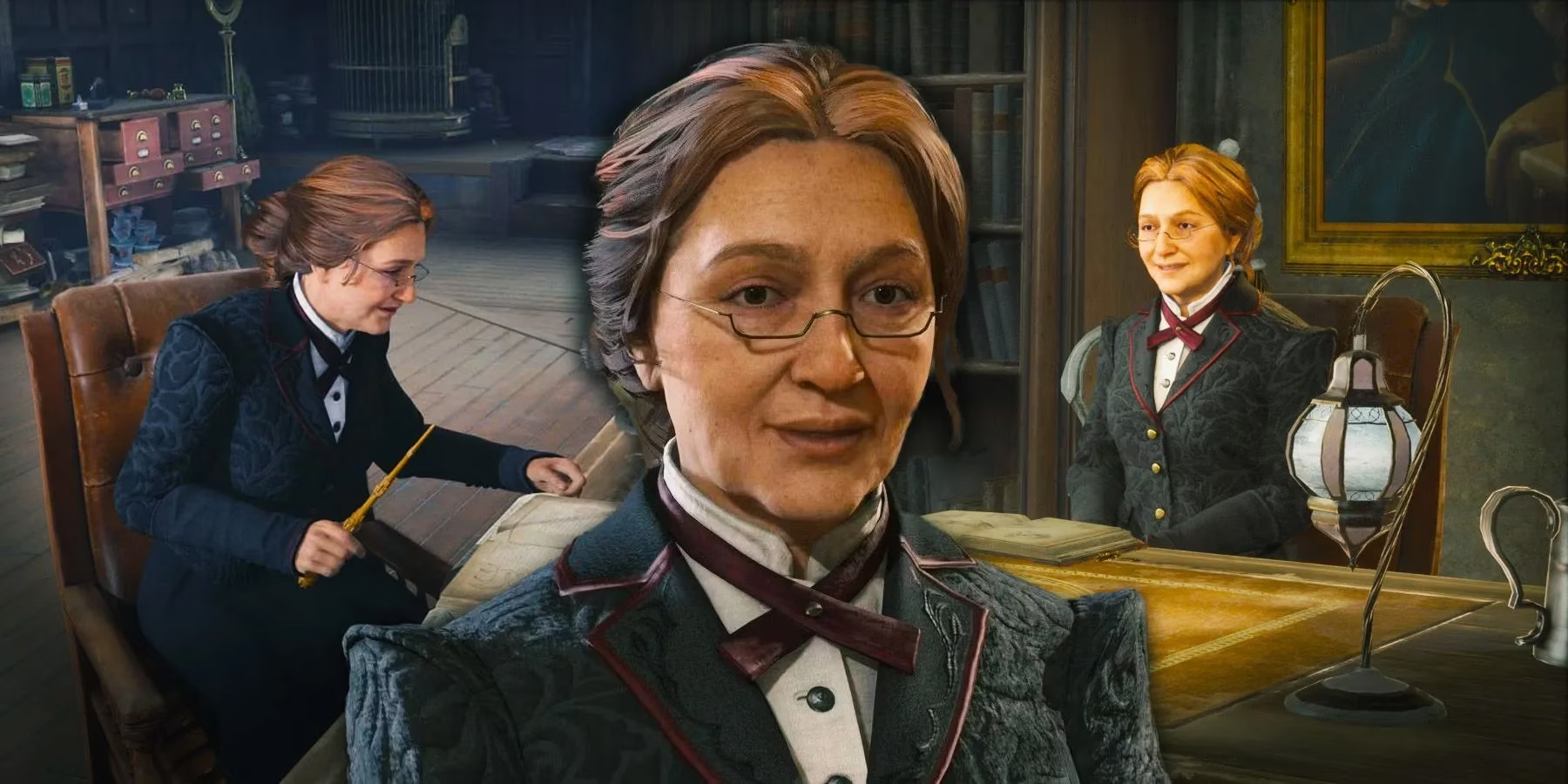
Now, I'll admit, her last name tugged at something in me. Professor Weasley's clear association with the iconic red-headed family from the stories I'd grown up with was a powerful thing. Part of me, the part that still identified with a certain ginger-haired Gryffindor, wanted to be completely honest. She was family, in a way. But the other part, the part that had just survived a dragon and touched magic older than the castle itself, screamed caution. Professor Fig had trusted me with this. Was I really going to blab to the Deputy Headmistress on day one?
Here's the funny thing I learned, the secret every seasoned Legacy player knows now in 2026: it genuinely doesn't matter. Whether you look her in the eye and say, "There is, in fact, more to the story," or you mumble, "I'm afraid there isn't," the train of the story chugs along the exact same tracks. The game gives you this monumental-feeling choice, this test of character, and then... winks at you. It's all for role-play.

I've played through both paths, because I'm that kind of witch. Let me break down what actually happens, because the differences are so subtle you might miss them if you blink:
-
If You Tell the Truth: Professor Weasley nods, a knowing look in her eyes. She says she trusts Professor Fig and assumes he has his reasons. Later, Fig himself will pull you aside and, in a hushed tone, essentially say, "Good start, but maybe let's not tell her everything, okay?" It's a gentle nudge toward secrecy.
-
If You Lie: Ah, this is where it gets a bit spicy. Professor Weasley doesn't buy it for a second. She'll arch an eyebrow and note that your answer is "almost precisely what Professor Fig said." It's a brilliant little moment that makes you feel like a terrible liar. But the real kicker? Later, Professor Fig will actually praise you. He'll commend your ability to "masterfully evade Professor Weasley's interrogation." You get a virtual pat on the back for being sneaky!
See? There is little to no difference between lying and telling the truth to Professor Weasley except for varied reactions from her and Professor Fig. The plot doesn't branch. Your house points don't get deducted. No one puts you in detention. The only thing that changes is the flavor of the conversation. It's like choosing between Pumpkin Juice and Butterbeer; you get a different taste, but you're still just getting a drink at the Three Broomsticks.

And this wasn't a one-time test. Oh no. Professor Weasley asks the player to come forward with the truth on a couple of other occasions throughout the school year. Each time, I faced that same dialogue box, that same internal debate. And each time, I learned that lying to Professor Weasley in either of these situations won't have an impact on future dialogue, our relationship, or how the story of my fifth year unfolds. It started to feel like a weird, recurring ritual between us—her asking, me deflecting, and her seeing right through me while choosing not to press it.
The reason for this ritual became crystal clear by the end of my adventures. Without spoiling too much for any new witches or wizards starting their journey in 2026, let's just say Professor Weasley... knows. She's always known. This decision purely concerns role-playing, so players should feel free to choose whichever option fits their personality. Are you a blunt, honest Hufflepuff who believes in authority? Tell the truth. Are you a cunning, secret-keeping Slytherin or a mischievous Gryffindor? Lie through your teeth. The game respects your character's voice without punishing you for it.

Looking back, I see the beauty in it. In a game filled with combat, exploration, and world-shaking magic, this series of quiet conversations with Professor Weasley was about defining who I was at Hogwarts, not what I achieved. It was my story to tell, even if the listener already knew the ending. So, to anyone facing that choice now, my advice is this: don't stress. Listen to your gut, or your house scarf, and answer however you want. The magic of your legacy is yours to write, one truthful—or brilliantly evasive—answer at a time.
Comments