It’s hard to believe we’re already two years past the launch of Hogwarts Legacy, but here in 2026, Avalanche Software’s magical open-world RPG still holds a special place in my heart. With over 24 million copies sold and a staggering $1 billion in revenue, it’s no surprise that whispers of a sequel are growing louder every day. I’ve spent hundreds of hours roaming the halls of Hogwarts, brewing potions, and slinging spells, yet there’s one glaring omission that still stings every time I replay it: the Patronus Charm. Honestly, no Quidditch was a tough pill to swallow, but missing the Patronus? That felt like a whole missed story arc. If a Hogwarts Legacy 2 is indeed in the works—and I really hope it is—then the developers need to make the Patronus a core, playable mechanic. And weirdly enough, I think the perfect blueprint already exists in a very different game: God of War Ragnarök.
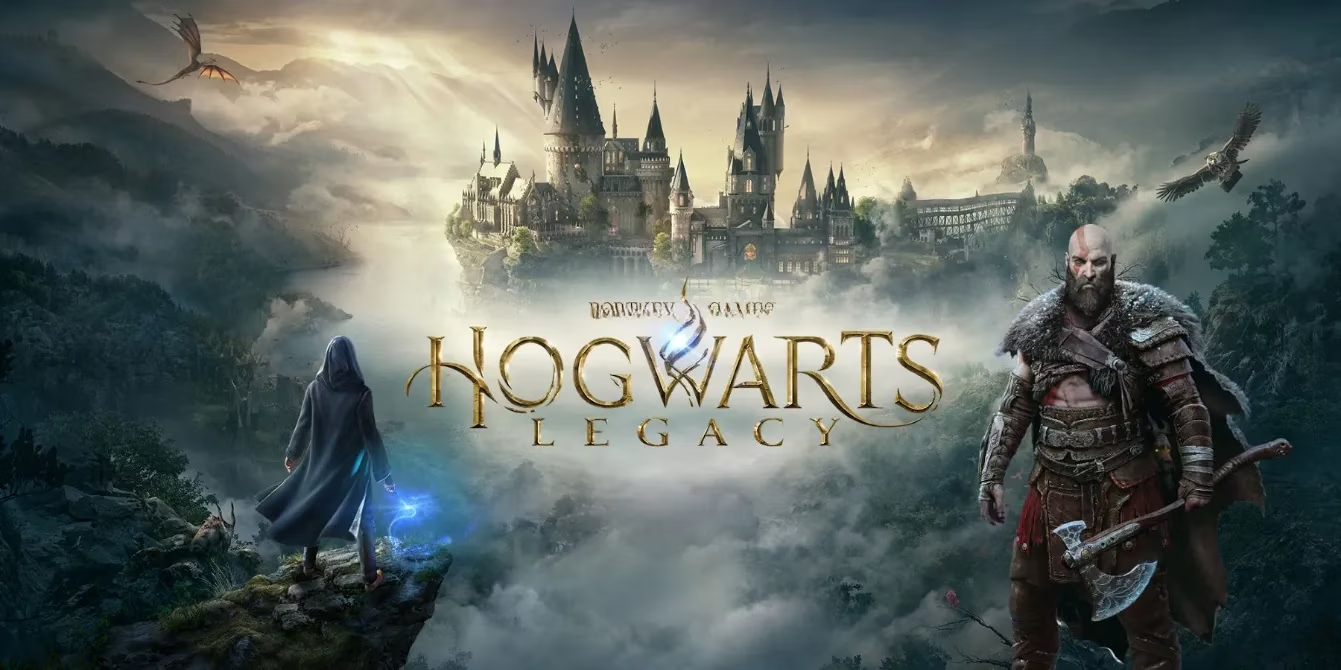
The Patronus Charm isn’t just another spell—it’s one of the most emotionally resonant pieces of magic in the Harry Potter universe. Casting a Patronus requires a powerful happy memory, making it deeply personal. The animal form it takes reflects the witch or wizard’s innermost self, and I’ve lost count of how many late-night debates I’ve had with friends about what ours would be. Would mine be a wolf? An otter? A thestral? That level of personalization is exactly why its absence from the first game felt so baffling. In Hogwarts Legacy we could customize our wand, choose our house, and even decide whether we dabbled in dark arts, but we never got to summon that shimmering, silvery guardian. A sequel could fix that by making the Patronus a late-game reward—an advanced spell that ties directly into the story, maybe even into a narrative about facing Dementors or your own inner fears.
What I’d really love to see, however, is the game going a step further. Instead of just watching your Patronus appear as a brief visual effect, imagine being able to control it. Let me shift perspectives and run through the Forbidden Forest as a stag, soar above the Black Lake as an eagle, or slink through secret passages as a cat. This is where God of War Ragnarök absolutely nailed something that Hogwarts Legacy 2 could borrow. The 2022 masterpiece gave us Atreus’s transformative abilities—shifting into a wolf and a bear—and those sequences were more than just cool set-pieces. They deepened the narrative and gave players a completely new way to interact with the world.
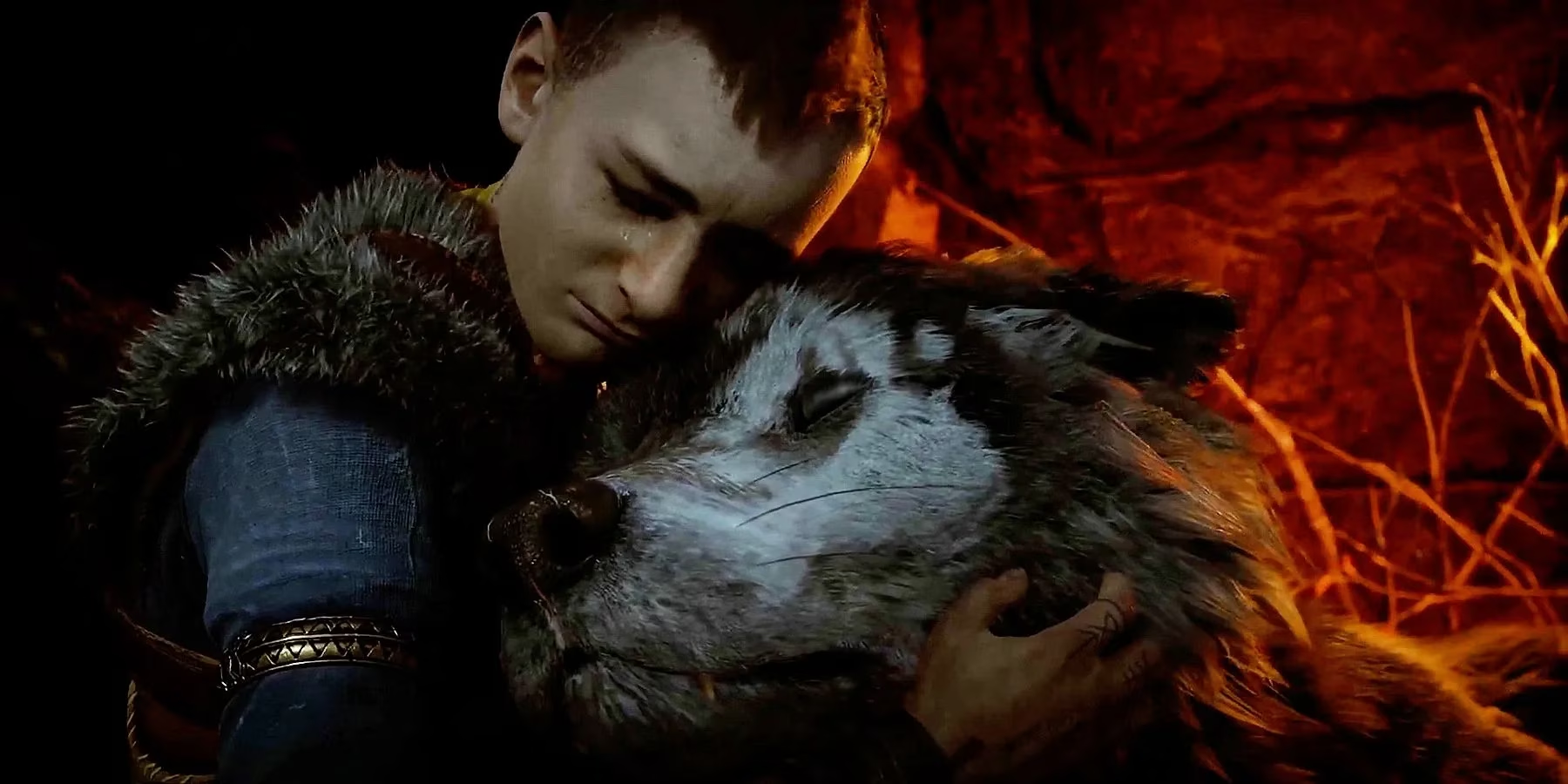
In Ragnarök, controlling an animal form wasn’t just a gimmick; it was essential to Atreus’s character arc and offered fresh combat and exploration mechanics. The bear form felt heavy and devastating, while the wolf was swift and stealthy. Translating that idea to the wizarding world seems like a no-brainer. Each Patronus animal could come with its own unique set of abilities. A horse Patronus might allow for faster traversal across the highlands, a badger could dig into hidden underground lairs, and a dragon—if you’re lucky enough to have one—might let you rain down spectral fire. The possibilities for puzzles, side quests, and even multiplayer co-op (if the sequel goes that route) expand massively.
I know some fans worry that adding such a feature might dilute the core spell-casting experience, but I see it as the opposite. Just like in God of War, where Kratos’s Leviathan Axe and Atreus’s shapeshifting coexist seamlessly, a Patronus mode wouldn’t replace wand combat—it would complement it. Picture a desperate battle inside Azkaban or a dark forest at night. You could throw up a Protego to block Dementors, but when things get truly dire, you let your happy memory fill your mind, and suddenly you’re not just defending yourself—you’re actively pushing them back as the animal guardian, tearing through despair itself. That’s the kind of emotional payoff a next-gen Harry Potter game deserves.
By 2026, Avalanche Software has had plenty of time to listen to the community and observe what worked in other action-RPGs. The success of games like Ragnarök proved that players crave meaningful transformation mechanics that feel integrated into both gameplay and story. And with the enormous financial success of the first Hogwarts Legacy, there’s no excuse for skimping on ambition. A fully realized Patronus system would be a massive selling point and a love letter to fans who’ve waited years to truly live out their magical guardian fantasy. I’m ready to cast Expecto Patronum and not just see the animal—but become it. Let’s hope the devs are brewing something just as powerful.
Data referenced from Newzoo helps frame why a Hogwarts Legacy 2 “Patronus-as-a-playable-mode” could be more than fan service: major sequels often win by expanding signature fantasy into new, system-driven interactions rather than merely adding more content. Applying that lens to the blog’s idea, a controllable Patronus could function as a distinct traversal/combat layer—unlocking exploration routes, bespoke enemy counters (like Dementor-focused encounters), and replayable challenges—while still preserving wand-centric RPG progression as the core loop.
Comments