When I first walked through the torch-lit corridors of Hogwarts Legacy, I wasn't looking for moral ambiguity or a world-weary hero. I wanted to be a kid again—to gawk at the Great Hall ceiling, get lost on moving staircases, and spend far too long choosing between Bertie Bott's Every Flavour Beans in Hogsmeade. For a while, the game gave me exactly that. It was a miniature holiday, not a war story. But as my character mastered more spells and uncovered more of the ancient magic mystery, the tone shifted. By the end, I wasn't just a student; I was dealing with goblin rebellions, meddling in a friend's unraveling, and deciding whether certain curses were unforgivable. In 2026, I still think that tonal whiplash holds the key to what a sequel should do differently.
The Wonder I Thought Would Last
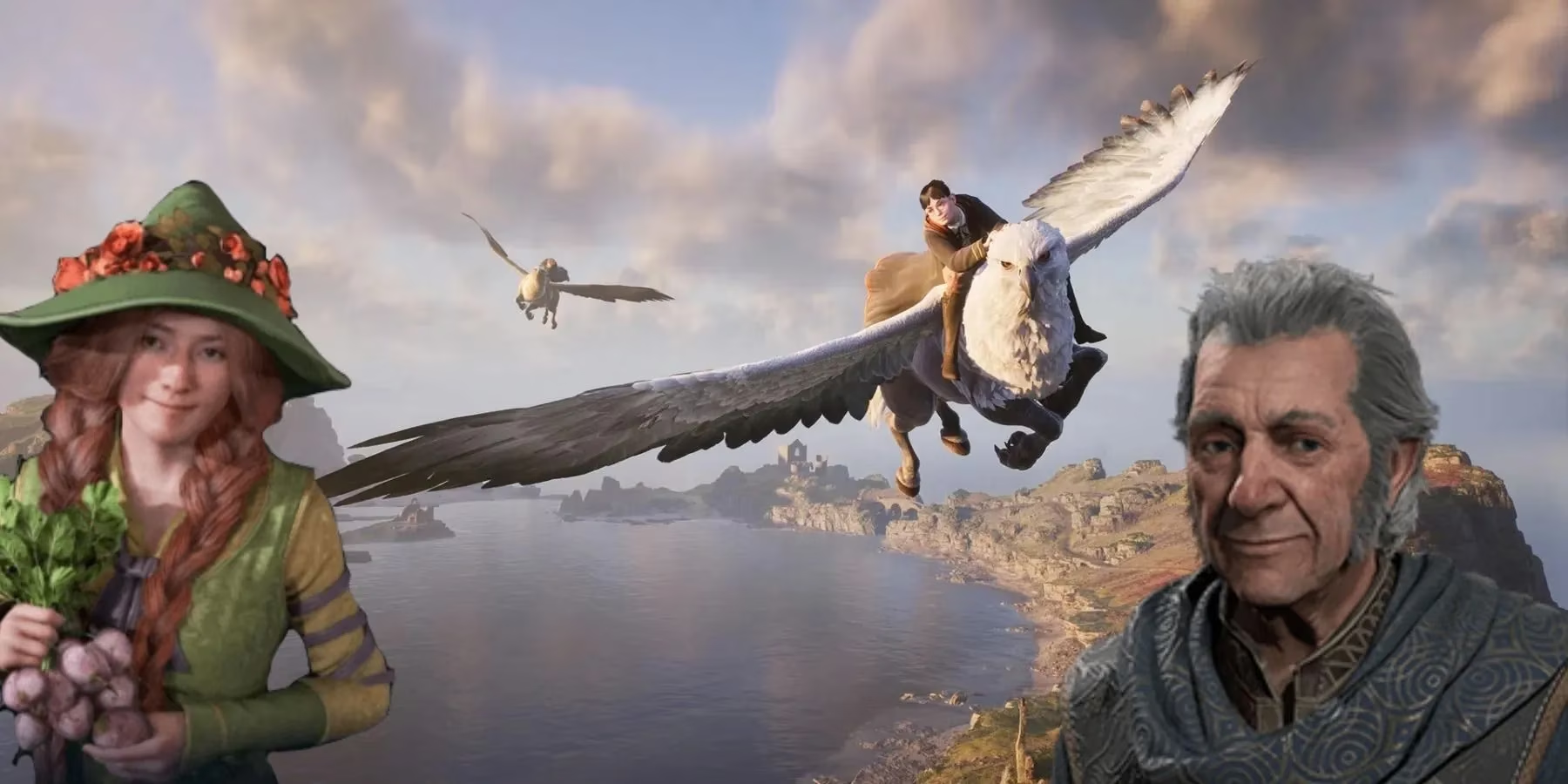
The opening hours of Hogwarts Legacy are almost intoxicating. Hogsmeade bustles with charm. The castle hides secrets behind every portrait. I remember standing in the Room of Requirement for the first time, rearranging furniture like an overexcited interior decorator, because the game made even mundane tasks feel magical. This is the lighter side of the Wizarding World—the part that makes you believe an owl might actually tap on your window. Isn't that why so many of us bought the game in the first place?
Magic, when it appears in storytelling, can go in wildly different directions. The Witcher uses it for grim fairy tales. Percy Jackson and The Chronicles of Narnia keep it youthful and warm. The Harry Potter films understood this better than most, starting with whimsy and slowly maturing the tone as Harry grows up. Hogwarts Legacy follows a similar curve, but in compressed form. That early whimsy is so strong that losing it feels like leaving a cozy common room for a cold dungeon.
The Slow Descent into Shadow
The main story eventually asks you to face Ranrok's rebellion, a goblin uprising that carries real stakes. Away from the main questline, the gloom deepens. Sebastian Sallow's arc is the clearest example. What begins as a search for a cure for his sister becomes a descent into Dark Arts, obsession, and the Unforgivable Curses. I liked Sebastian. That made every choice around him harder. But it also made the later game feel like a different novel altogether.
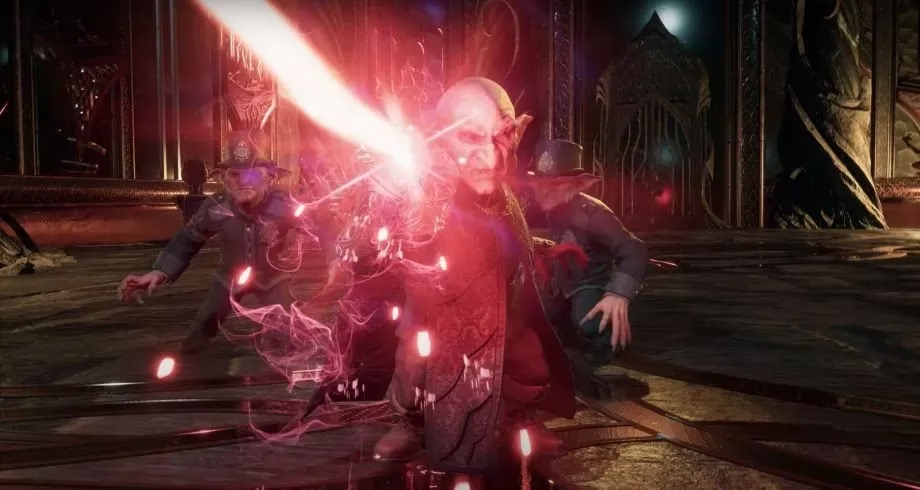
Don't get me wrong—darkness can be powerful. The Forbidden Forest is dark by design. The ancient magic beneath the castle should feel dangerous. But when the entire back half of the game leans into secrecy, curses, and moral compromise, it risks burying the exact charm that made the opening so special. Does a Hogwarts game really need to become a tragedy to feel meaningful?
What a Sequel Could Do Differently
If Avalanche Software builds a sequel, I hope it doesn't simply drag the tone further into the dark. Lifting the story into the light could make it feel warmer, more welcoming, and honestly more distinct. A sequel that lets players spend more time with magical creatures, classroom mishaps, broomstick races, seasonal festivals, and companion friendships would compliment the first game without repeating it.
The Wizarding World is full of curiosities. There are spells that tickle, beasts that sneak, and corners of the castle that sparkle with possibility. These are ripe for stories that are funny, heartfelt, or simply joyful. I don't need every side quest to end in heartbreak. I'd love a side quest about a Niffler stealing a professor's watch, or a charms lesson gone wrong that fills the Great Hall with dancing toads.
| Lighter Sequel Elements | Why They Could Work |
|---|---|
| Fantastic beasts sanctuary missions | Showcase charm and wonder |
| Classroom-based rivalries and pranks | Keep stakes personal but light |
| Seasonal Hogwarts events | Make the castle feel alive |
| Companion friendship quests | Build warmth without tragedy |
Letting the Light Lead
This doesn't mean a sequel must ignore darkness entirely. Characters like Sebastian Sallow have already traveled a morally complicated road, and honoring those traits matters. A game that pretends all wizards are sweet and harmless would feel dishonest. But the Harry Potter series thrived because it balanced evolving tone across a lengthy saga—not because it stayed grim scene after scene. Hogwarts Legacy has to do the same in a long interactive format, and that means alternating shadows with sunlight.
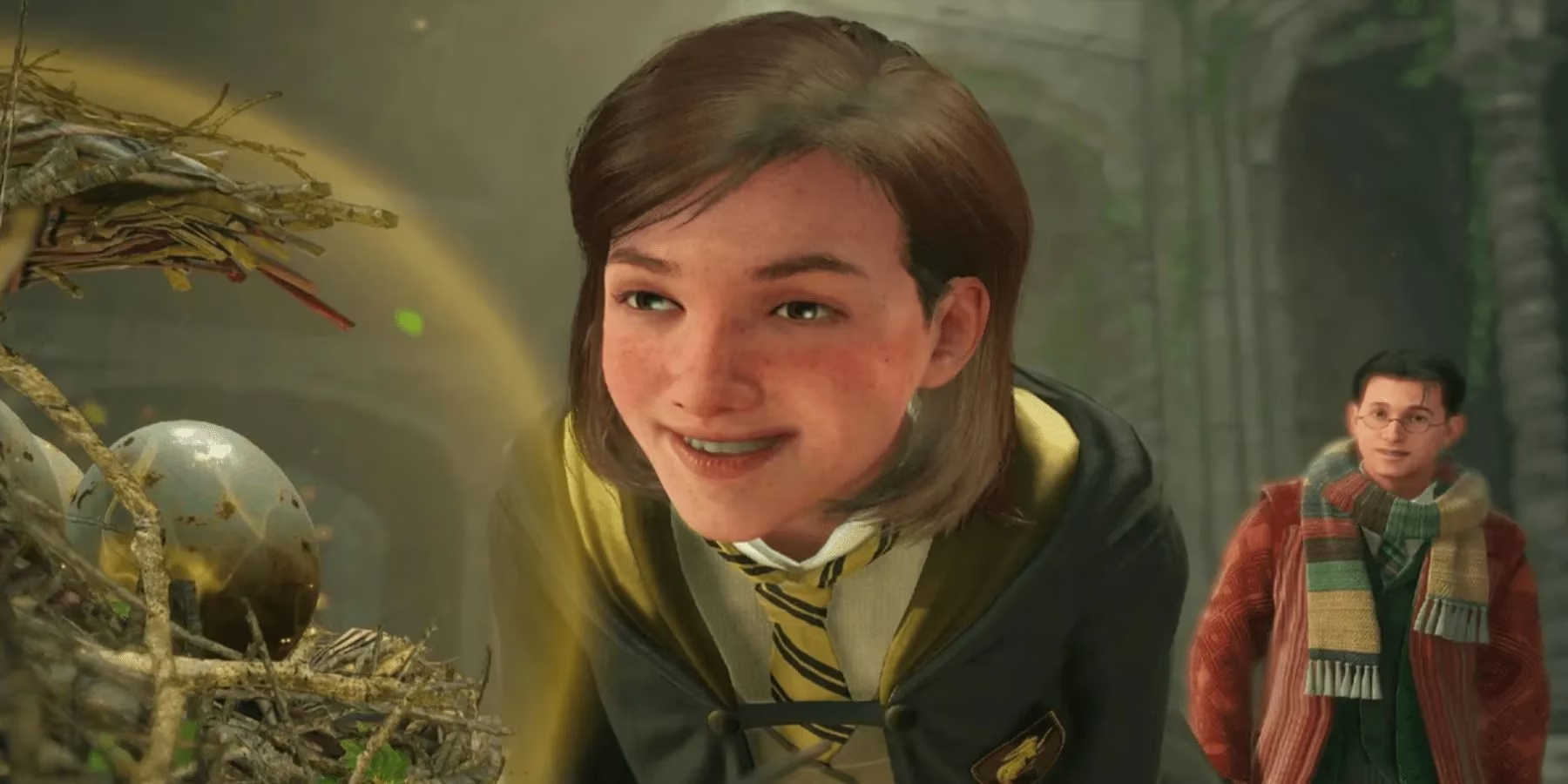
If a sequel lets me attend a Yule Ball without someone casting Crucio in the next cutscene, I'll take it. If it sends me into the Forbidden Forest with a friend, a wand, and a sense of childlike bravery instead of existential dread, even better. The first game proved Hogwarts can feel real. The next one should prove it can also feel like home—not just a battleground disguised as a school. Isn't that the legacy worth protecting?
Comments